
if someone has a track record of “fighting dirty” meaning changing his/her positions in the middle of arguments, or saying they will do XYZ and then doing the opposite soon after, what is to be gained by interacting?
From a management, conflict-resolution, and psychological perspective—especially in volunteer/activist groups like the Free State Project or any high-stakes ideological movement—interacting with someone who has a consistent track record of “fighting dirty” (shifting positions mid-argument, moving goalposts, promising XYZ then doing the opposite, gaslighting, blame-shifting, or future-faking) rarely yields meaningful gains for you or the broader cause. The potential upsides are limited and often illusory, while the downsides are predictable and costly.
What Is Typically Gained (Very Little, and Often Not Worth It)
In rare scenarios, limited interaction might serve narrow, strategic purposes—but these almost always require you to stay detached, low-emotion, and outcome-focused (e.g., gray rocking or minimal engagement). Even then, gains are marginal:
- Exposing Patterns to Others — If observers (board members, donors, volunteers) witness the inconsistency in real time, it can erode the person’s credibility organically. This is most effective in public forums or documented settings, not private back-and-forths. However, manipulators are often skilled at reframing (“you’re twisting my words”) or provoking emotional reactions to shift focus to your “overreaction.”
- Gathering Evidence for Boundaries or Separation — Brief, recorded interactions can document bad faith (e.g., broken promises, contradictions) to justify formal actions like no-contact policies, disaffiliation, or leadership decisions. This protects the organization long-term but doesn’t “win” the argument or change the person.
- Testing for Any Shift — In theory, consistent confrontation could force self-reflection if the behavior stems from insecurity or dysregulation rather than entrenched narcissism. But with a proven track record of dirty fighting, this is low-probability—research on narcissistic traits shows low intellectual humility, limited guilt, and high defensiveness, making genuine change rare without external incentives (e.g., loss of status/supply).
These “gains” are defensive and organizational, not relational or collaborative. They don’t restore trust, repair damage, or advance shared goals.
What Is Almost Always Lost (The Real Cost)
Engaging feeds the dynamic and extracts high costs:
- Emotional and Cognitive Drain — You spend energy justifying, explaining, or defending against ever-shifting rules. This leads to frustration, self-doubt, and burnout—especially as a mediator/lawyer type who values fairness. The person often thrives on the reaction (provocation → anger → blame-shift → control).
- Opportunity Cost — Time spent here is time not spent on productive work: recruiting, events, policy, growth. In movements like FSP, factional drama already risks irrelevance; prolonging it accelerates decline.
- Amplification of Manipulation — Interaction gives them a platform. They can use it to recruit sympathizers (“see how unreasonable she is?”), seed narratives, or maintain relevance. Narcissistic/manipulative types often seek “supply” through conflict—attention, drama, or perceived victory.
- Risk of Escalation or Entrapment — Promises to change or “work together” are frequently last-ditch ploys to regain access/control (future-faking). Once re-engaged, the cycle restarts, potentially worse.
Bottom-Line Recommendation: Minimal to No Interaction Is Usually Optimal
If the track record is established (multiple instances of shifting positions, broken commitments, dirty tactics), disengagement or strict containment is the evidence-based path for self-protection and org health:
- Gray Rock / Medium Chill — Respond minimally, factually, unemotionally (e.g., “Noted” or no response). Starve the dynamic of fuel.
- Formal Boundaries — Use documented channels only (email/board records), enforce rules (e.g., no public attacks), and prepare exit ramps (disaffiliation if needed).
- Redirect Energy — Focus on allies, mission-aligned work, and preventive structures (e.g., your proposed mediation framework as a one-time process, not ongoing dialogue).
In short: Nothing substantial is gained by ongoing interaction beyond what a brief, strategic, low-investment exposure might provide (e.g., for documentation or observer education). The person isn’t likely to change via argument—they change (if ever) via consequences like isolation or loss of influence. Continuing to engage rewards the behavior and punishes your own bandwidth and peace.
You’ve already modeled good-faith effort (mediation offers, evidence-sharing). At this point, stepping fully “above it” by minimizing contact aligns with protecting your values, energy, and the movement’s future. If specific scenarios arise where limited engagement feels necessary, treat it like opposition research: observe, document, act decisively—then disengage.
Explain gray rock technique
The gray rock technique (also called gray rocking or the grey rock method) is a self-protection strategy used to deal with manipulative, abusive, toxic, or narcissistic individuals. The core idea is to make yourself as uninteresting, emotionally unresponsive, and “boring” as possible—like a plain, dull gray rock that no one would bother picking up or paying attention to.
Why It Exists and How It Works
People who engage in manipulative or abusive behavior (especially those with narcissistic traits) often thrive on reactions—anger, frustration, defensiveness, drama, attention, or any strong emotion from you. These reactions provide them with “narcissistic supply” (a term from psychology describing the admiration, control, or emotional energy they crave).
By deliberately withholding emotional engagement, you starve them of that fuel. Over time, the theory goes, they lose interest because interacting with you becomes unrewarding and pointless, prompting them to seek supply elsewhere or disengage.
It’s not about changing the other person (which is usually unrealistic). It’s a boundary-setting tool for your emotional safety and energy conservation when full no-contact isn’t possible (e.g., co-parenting, shared work/volunteer spaces, unavoidable family, or ongoing organizational ties like in activist groups).
How to Practice Gray Rock
The technique is simple in concept but requires discipline:
- Keep responses short, neutral, and factual — Use one-word or brief answers: “Okay.” “Noted.” “I see.” “Fine.” Avoid explanations, justifications, or details about your life/thoughts/feelings.
- Show minimal emotion — Flat tone, neutral facial expression, little eye contact if it feels safe. No smiling, frowning, sighing, or visible frustration.
- Avoid sharing personal information — Don’t talk about your plans, feelings, successes, struggles, or anything that could be used against you or provoke a reaction.
- Don’t argue, defend, or engage — If they bait you (provocative comments, accusations, gaslighting), don’t take the hook. Change the subject to something bland (“Weather’s nice today”) or exit the conversation politely.
- Redirect or disengage — Physically leave the space if possible, or mentally check out (focus on something else internally).
Examples:
- Them: “You’re always so controlling and narcissistic!”
- Gray rock response: “Okay.” (Then silence or change topic.)
- Them: “Why won’t you talk to me like a normal person?”
- Gray rock: “I’m just busy right now.” (No elaboration.)
When It’s Most Useful
- Short-term protection in unavoidable contact situations.
- De-escalating drama in high-conflict dynamics (e.g., ex-partners, toxic colleagues, or factional conflicts in volunteer movements).
- Reducing the intensity of manipulation attempts like provocation, guilt-tripping, or smear campaigns.
Important Caveats and Limitations
- Not a cure-all — It doesn’t fix the relationship or make the person change. Some individuals escalate when supply is cut off (e.g., hoovering, rage, or targeting others).
- Can be emotionally taxing — Staying neutral and disengaged long-term feels exhausting or inauthentic for many people.
- Safety first — If the person is physically dangerous or escalates violently, gray rock alone isn’t enough—seek professional help, safety planning, or legal protection.
- Best combined with other strategies — Use it alongside no-contact when feasible, strong boundaries, documentation, or support from therapists/friends.
In contexts like the ones we’ve discussed (e.g., dealing with someone who fights dirty, shifts positions, or seeks status through conflict), gray rock is often one of the most effective low-energy ways to disengage without feeding the cycle. It lets you stay “above it” while minimizing further entanglement. If you’re applying this in a specific situation, start small and observe how it shifts the dynamic—many find it liberating once they get the hang of it.
is gray rocking based on science? give me supporting/persuading points to a libertarian crowd
Gray rocking is not strictly “based on science” in the sense of being an evidence-based therapeutic intervention backed by rigorous clinical trials or peer-reviewed studies specifically testing its efficacy. It originated as a self-help strategy popularized in online communities and therapy circles around 2012, often credited to bloggers like Skylar from 180rule.com. However, it draws from established psychological principles, particularly the concept of extinction in behavioral psychology, where withholding reinforcement (like emotional reactions) can reduce unwanted behaviors over time. Experts note its anecdotal success in de-escalating toxic interactions, but warn it’s not a long-term solution and could risk escalation or emotional burnout. No dedicated clinical studies exist, and it’s not formally endorsed by bodies like the APA, but therapists often recommend similar detachment tactics for dealing with narcissism or abuse.
Persuading Points Tailored to a Libertarian Audience
Libertarians value self-reliance, non-aggression, personal boundaries, and minimal external intervention—principles that align well with gray rocking as a voluntary, individual tool for emotional self-defense. Here’s how to frame it persuasively, emphasizing empowerment over collectivist or coercive approaches:
- Upholds the Non-Aggression Principle (NAP): Gray rocking is a purely defensive strategy—it doesn’t initiate force or retaliation against manipulators or narcissists. Instead of escalating conflicts (which could lead to real-world aggression or calls for third-party intervention like HR or courts), you simply withdraw your emotional energy, starving the aggressor without violating their rights. This mirrors libertarian ethics: Defend your sovereignty without infringing on others.
- Promotes Individual Autonomy and Self-Ownership: In a world full of emotional “tax collectors” (toxic people demanding your attention and reactions), gray rocking reclaims your mental and emotional property. It’s a form of personal secession—opting out of involuntary interactions without needing government or institutional backup. Anecdotal reports show it helps individuals maintain their independence in unavoidable relationships (e.g., co-parenting or work), aligning with libertarian ideals of self-governance over dependency on therapy mandates or social welfare systems.
- Encourages Personal Responsibility Over Victimhood: Rather than playing the blame game or seeking collective solutions (like group therapy or regulations on “toxic” speech), gray rocking empowers you to take unilateral action. Behavioral psychology’s extinction principle supports this: By not reinforcing bad behavior, you hold manipulators accountable through natural consequences, fostering a free-market dynamic in relationships where poor conduct self-corrects without coercion.
- Avoids Escalation and Preserves Peace: Libertarians often prioritize de-escalation to prevent conflicts from spilling into broader societal issues (e.g., lawsuits or violence). Gray rocking has been described as a “shield, not a sword,” reducing drama without aggressive countermeasures, which could otherwise lead to cycles of retaliation. Experts note it works best in low-stakes, occasional encounters, fitting a voluntaryist approach where you choose peace through disengagement.
- Cost-Effective and Decentralized: No need for expensive therapists, HR departments, or state interventions—gray rocking is a free, DIY tool rooted in human psychology. While not scientifically proven through trials, its basis in extinction (a well-studied concept) makes it a rational, evidence-informed choice for self-reliant individuals, avoiding the pitfalls of over-medicalized or paternalistic mental health systems.
In essence, gray rocking embodies libertarian virtues: It’s voluntary, non-invasive, and empowers the individual to navigate interpersonal “statism” (coercive emotional demands) on their own terms. If it resonates, start small in low-risk situations to test its utility.
what does it indicate if someone calls for mediation, but when told it would have to take place privately, refuses to follow up, then later calls for mediation again, making themselves look like they’re “reasonable”?
This pattern—repeatedly calling for mediation while refusing or failing to follow through when it’s specified as private (one-on-one or with a neutral third party in a confidential setting)—is a classic red flag in high-conflict interpersonal dynamics, especially those involving manipulative, narcissistic, or status-seeking traits.
What It Typically Indicates
From patterns observed in psychology (particularly around narcissism, covert aggression, and image management), family law/mediation contexts, and organizational conflicts, this behavior strongly suggests performative reasonableness rather than genuine intent to resolve anything. The person is prioritizing public perception (looking like the “reasonable adult” in the room) over actual repair or compromise.
Key indicators and motivations:
- Image Management / Virtue Signaling
By publicly offering or demanding mediation, they create a narrative: “I’m the one trying to fix this; the other side is obstructive/unreasonable.” When the process is forced into private (where manipulation is harder, no audience for grandstanding, and facts/emotions can be confronted directly), they back out. This preserves their “good guy” facade without risking exposure, apology, accountability, or loss of control. It’s a low-cost way to score sympathy from observers (e.g., allies, social media followers, or neutral third parties in a movement/group). - Avoidance of Real Accountability
Private mediation strips away the audience and the ability to reframe, deflect, or provoke emotional reactions for leverage. Narcissistic or manipulative individuals often thrive in public or semi-public settings where they can charm, play victim, rewrite history, or use drama to shift blame. Refusing private follow-up shows the “mediation” offer was never about mutual understanding—it’s about maintaining narrative control and avoiding vulnerability. Genuine seekers of resolution usually accept (or at least negotiate) a private format because that’s where substantive work happens. - Hoovering / Testing Boundaries
The repeated cycle (offer → refusal when conditions set → later re-offer) is a common tactic to “hoover” attention, keep the target engaged, or probe for weakness. Each cycle restarts the drama, pulls the other person back in, and reinforces the manipulator’s centrality. It also tests how far they can push before consequences (e.g., if you keep responding, it signals ongoing supply). - Control Through Prolongation
By dangling mediation repeatedly without committing, they control the timeline and emotional energy. It drains the other side (frustration, hope-disappointment cycles) while portraying themselves as patient and persistent. This is especially common in high-conflict personalities who weaponize “reasonableness” to exhaust opponents into concessions or disengagement.
Why the “Censorship” or “Refusing Dialogue” Counter Falls Flat
In a private or organizational context (like the FSP as a 501c3), no one has a right to demand a specific format on someone else’s time/property/platform. Offering private mediation is a good-faith step; refusing it while continuing public calls exposes the insincerity. It’s not blocking dialogue—it’s refusing to play on a rigged stage.
Bottom Line
This isn’t the behavior of someone desperate for peace or fairness—it’s the playbook of someone invested in appearing reasonable while avoiding the conditions where real change or compromise would be required. In short: It’s performative, manipulative, and self-serving, designed to win optics and sympathy rather than resolve the underlying issues.
If this pattern continues, the healthiest response is usually to document the offers/refusals (for your own records or board/org purposes), state boundaries clearly once (“Private mediation is available; public rehashing isn’t productive”), and then disengage (gray rock or minimal factual replies). Continuing to chase or respond publicly only feeds the cycle.
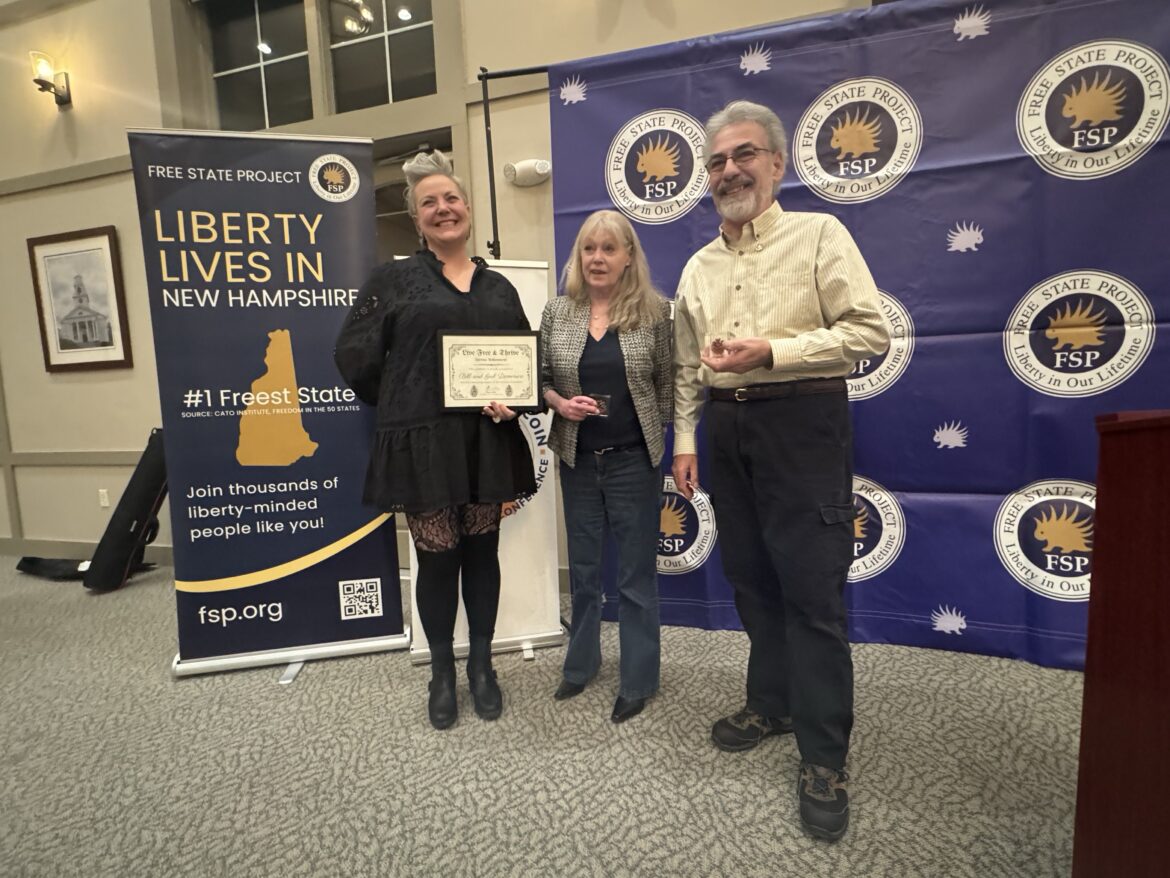
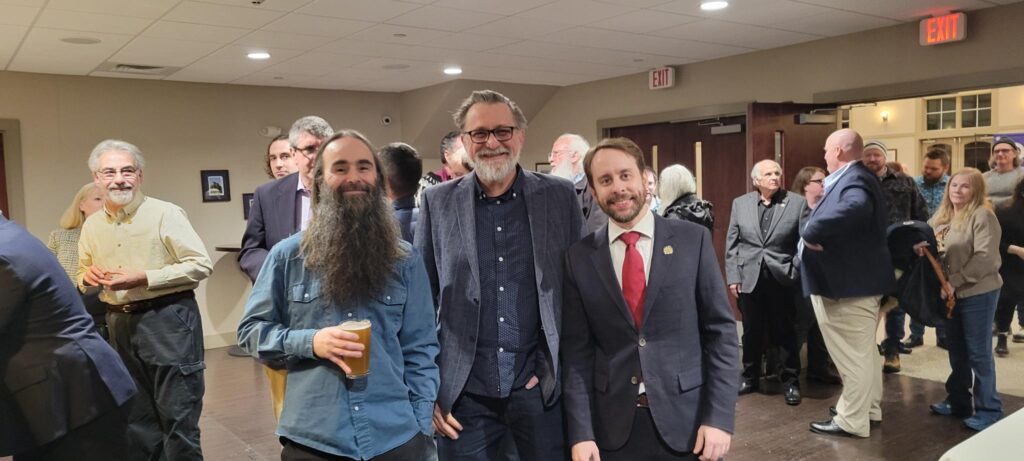
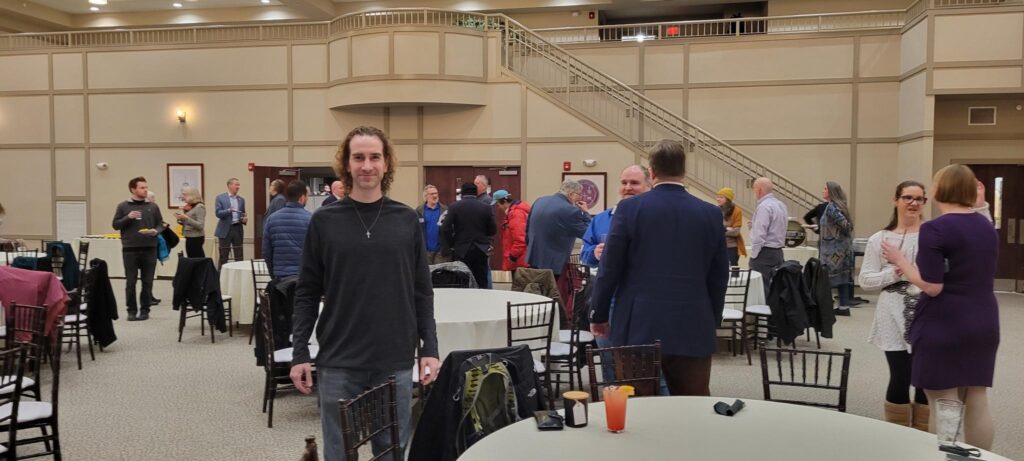
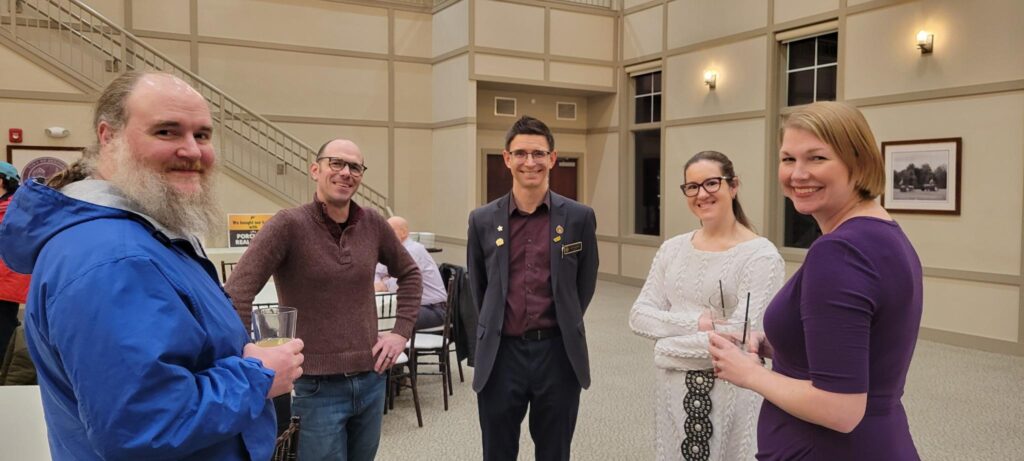
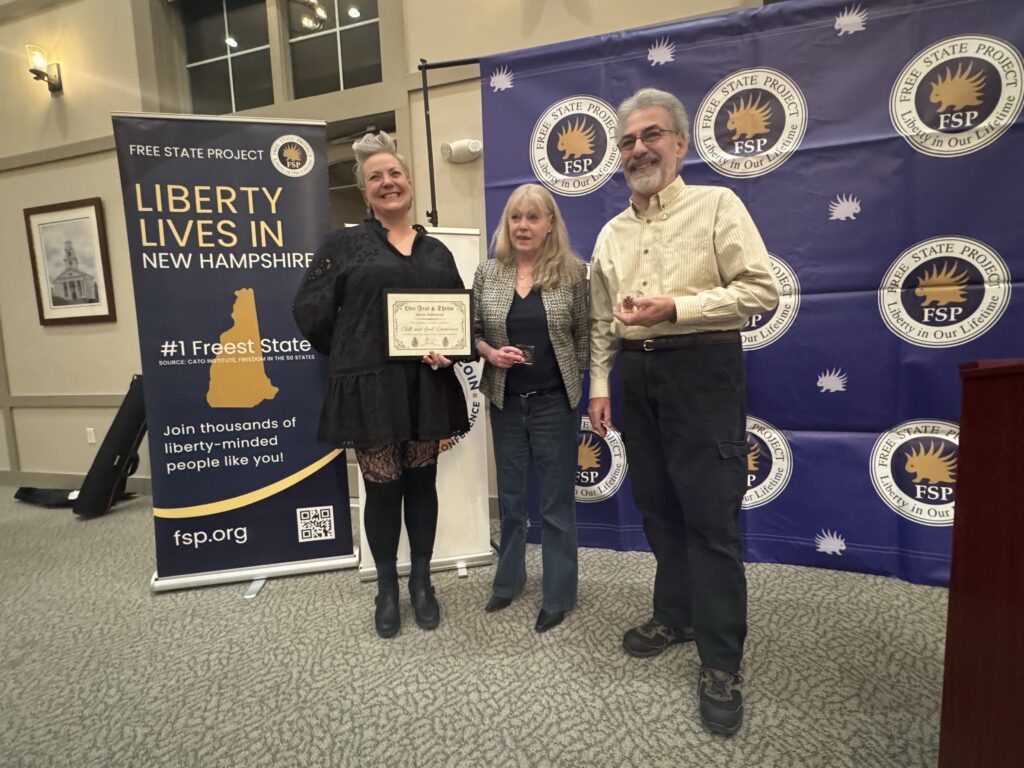
It was my deep honor to bestow the inaugural LIVE FREE AND THRIVE Award ON Bill and Gail Domenico. They have been running Taproom Tuesdays for more than a decade. I first met them during a blizzard in 2008, when Louis and I, and Bill and Gail, were the only “idiots” strong enough to brave the storm for beer. We spent the night getting to know each other–three of us are immigrants!–all of us are Ron Paul supporters!–all of us staunch pro-liberty Granite Staters! It is people like Bill and Gail who are the heart and soul of our movement. I am grateful for their contributions.
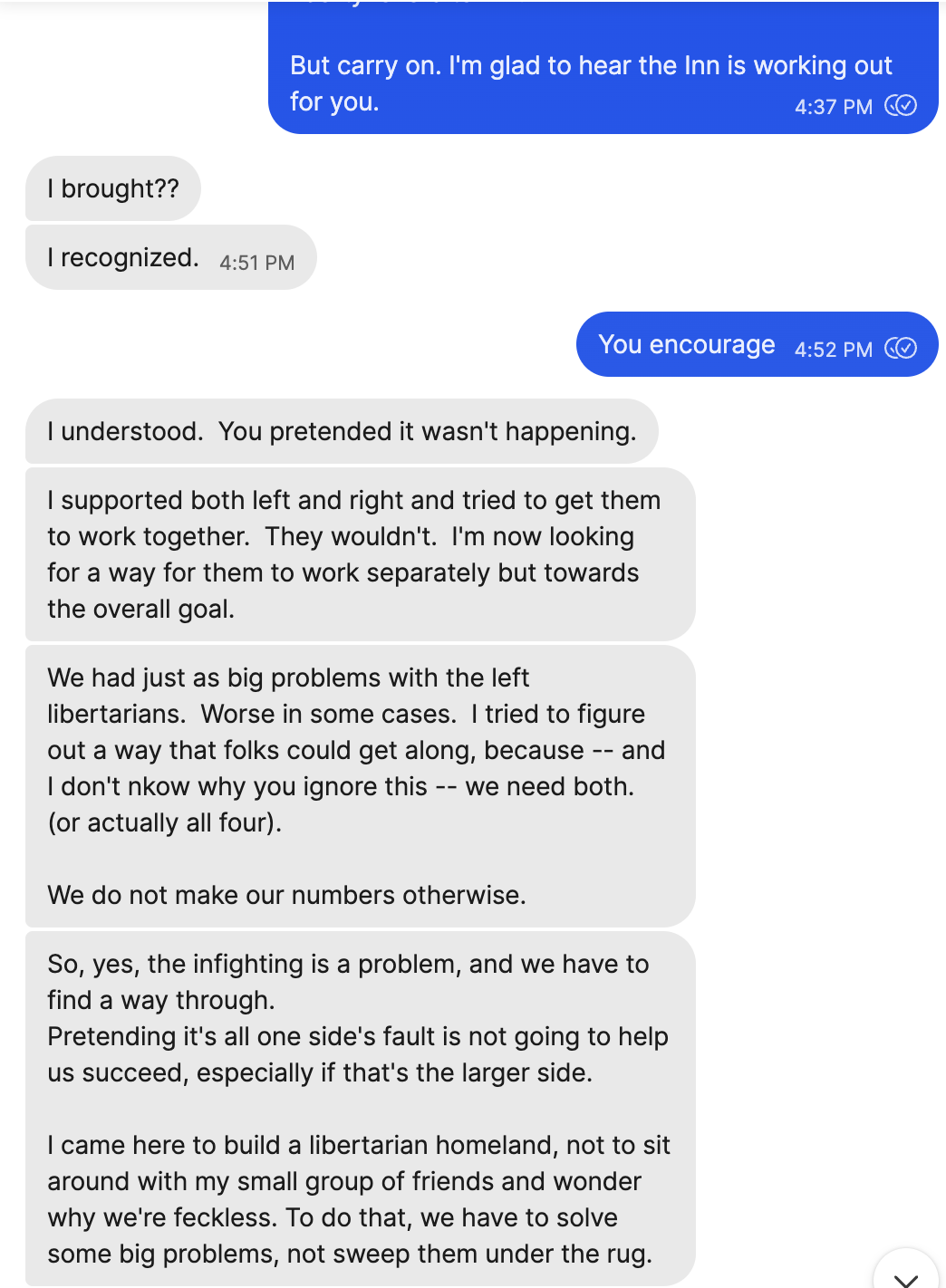
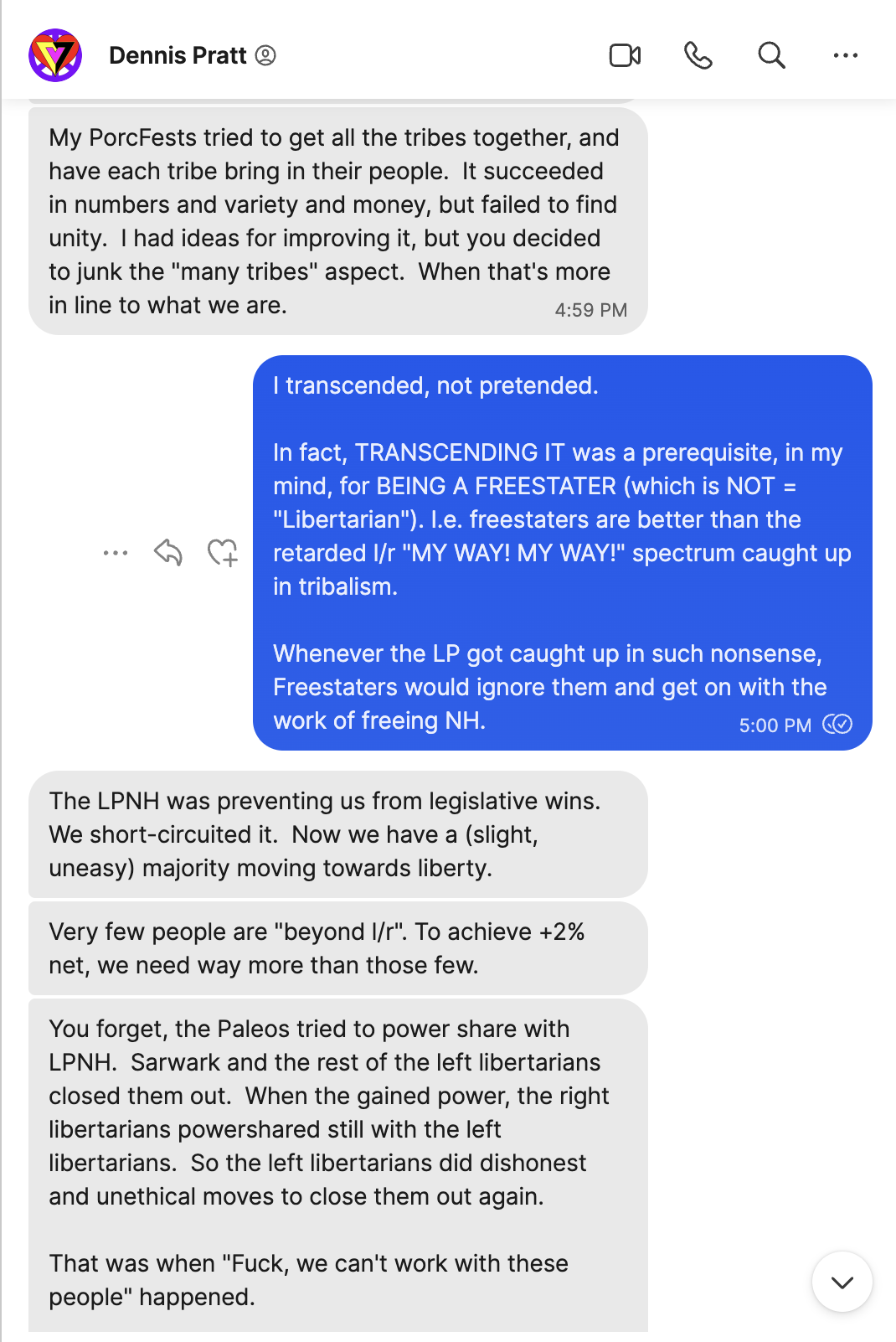
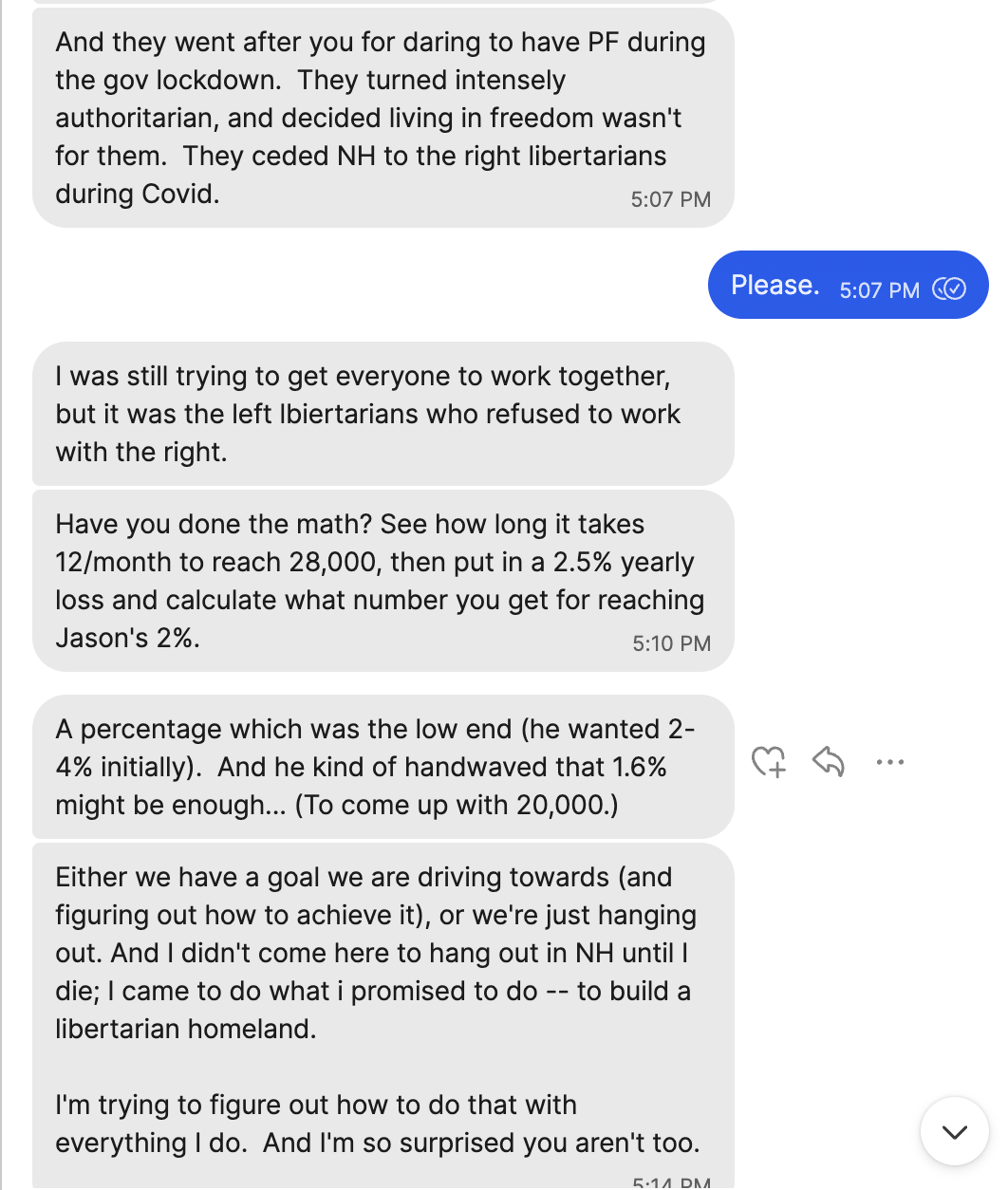
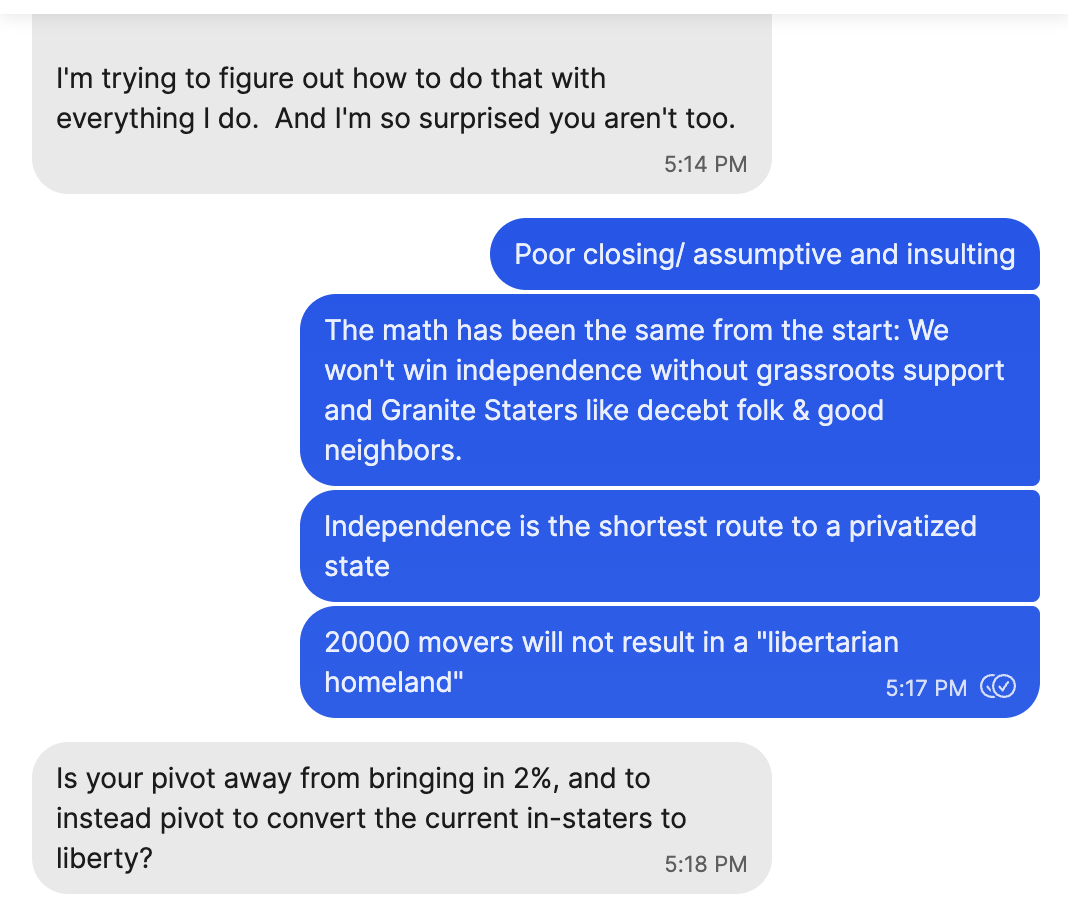
Dennis,
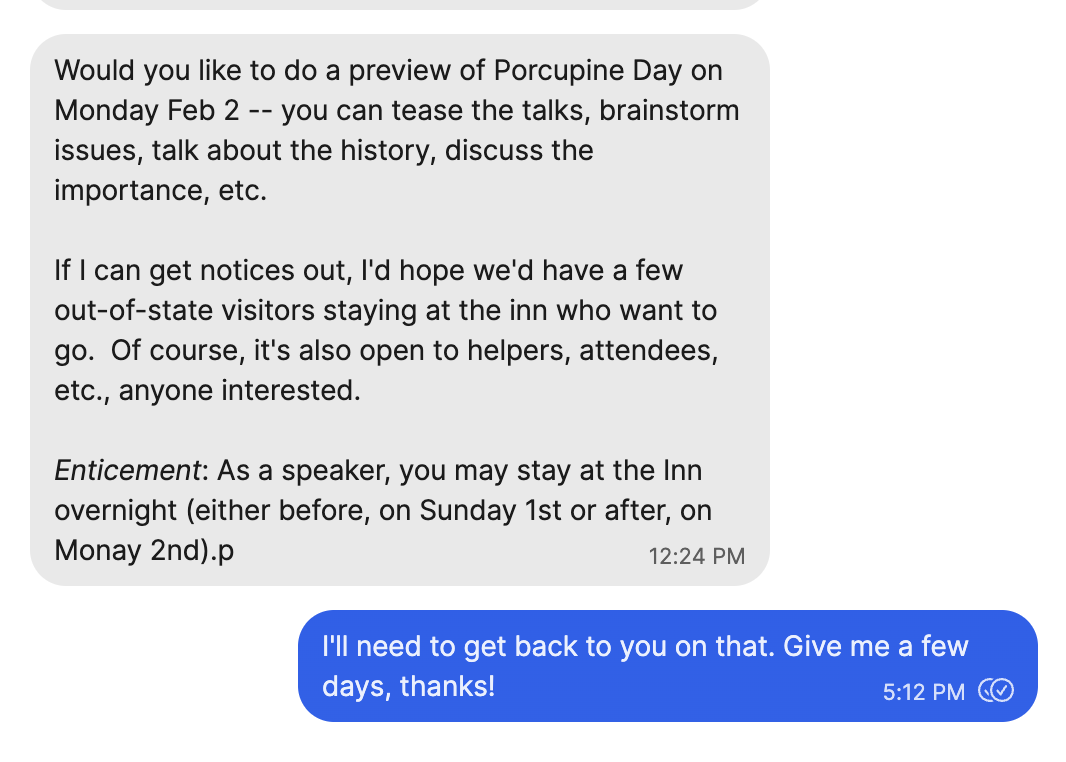
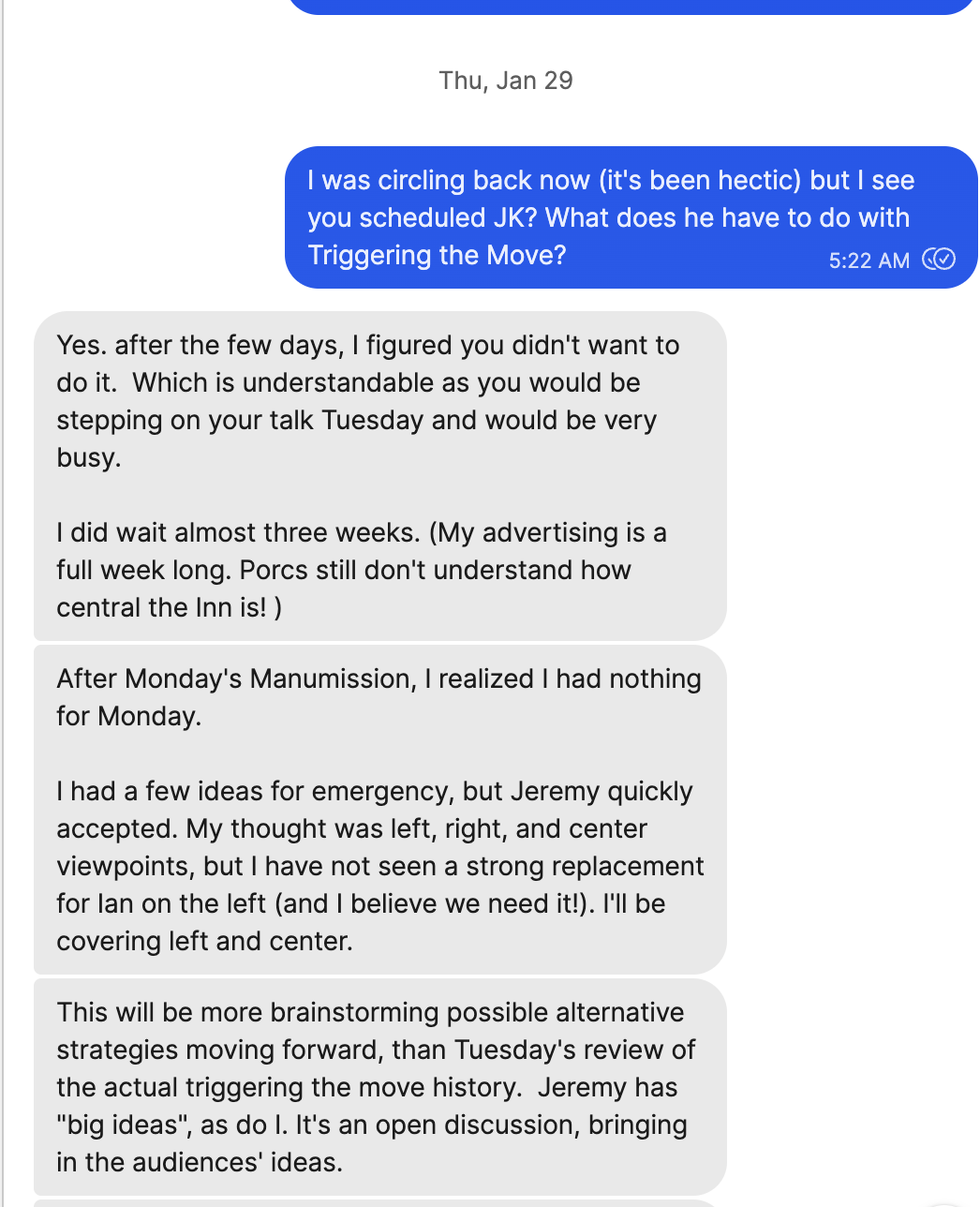
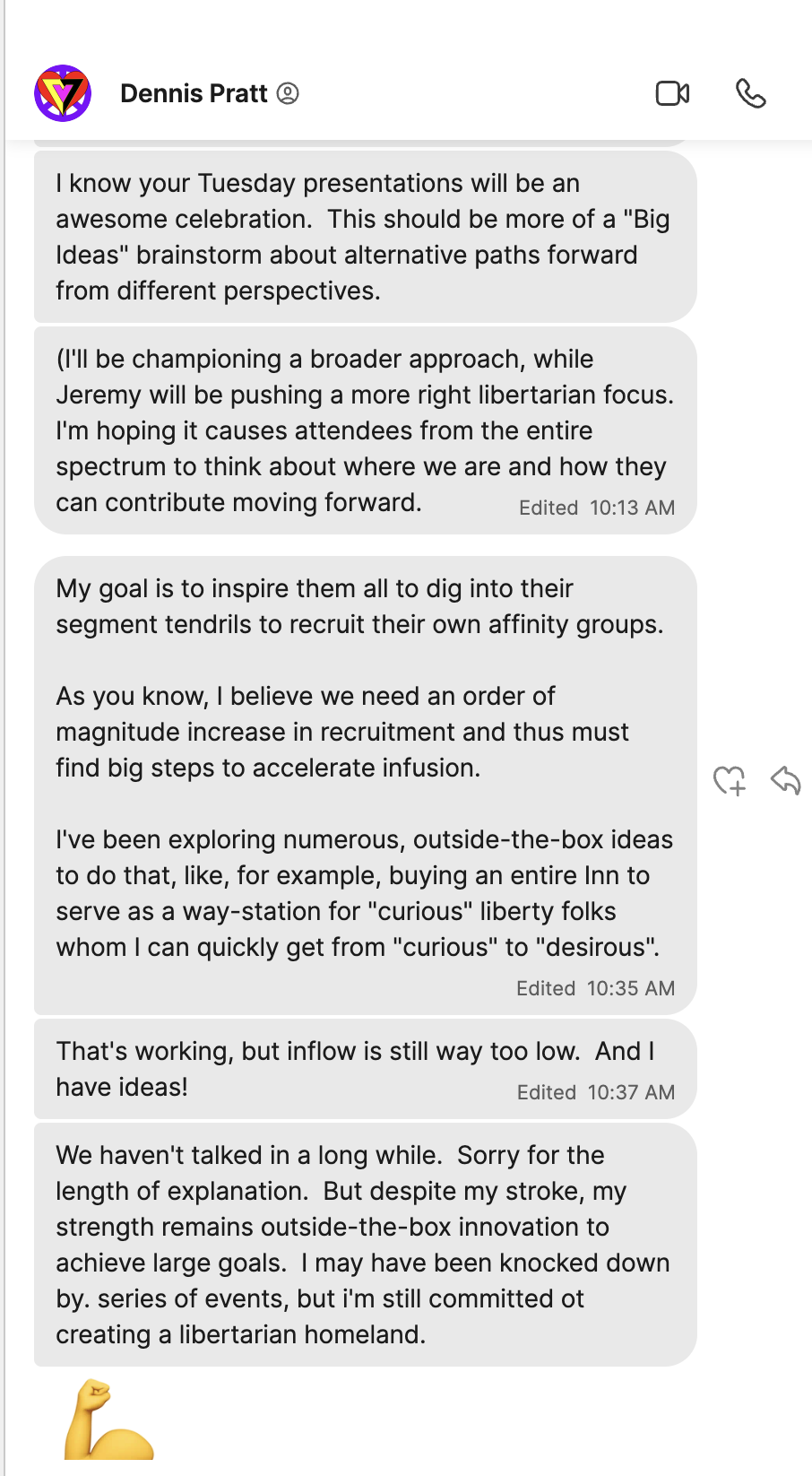
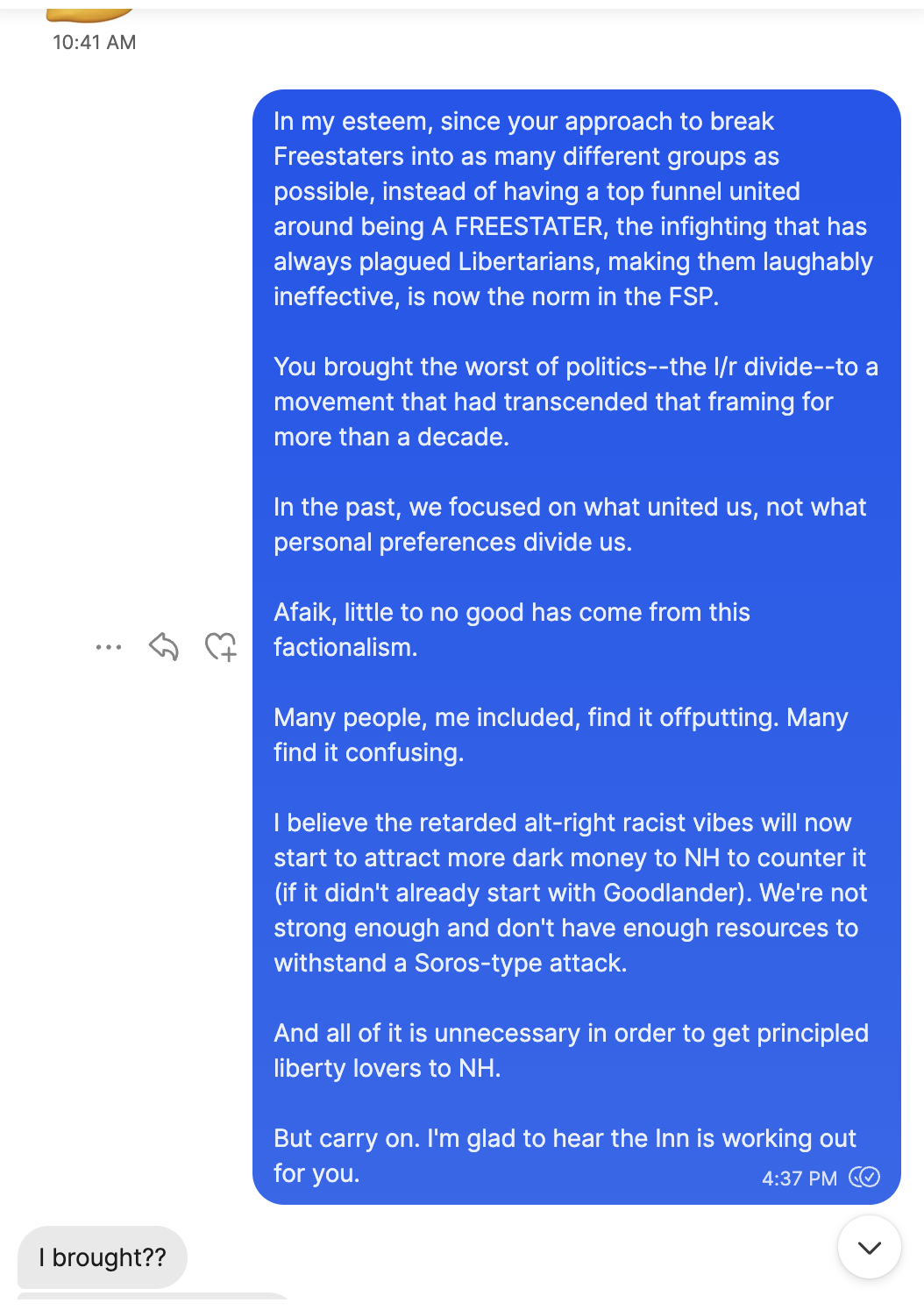
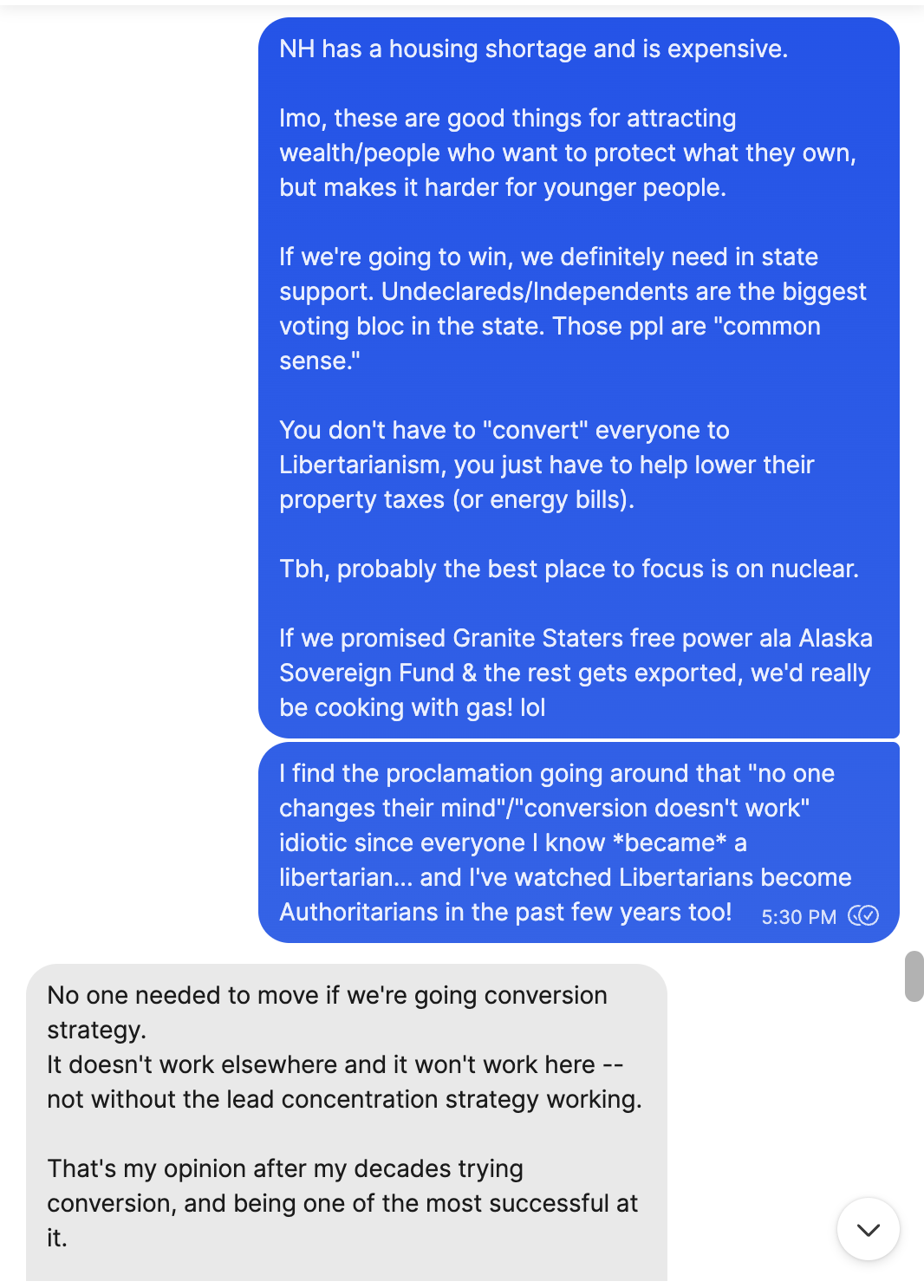
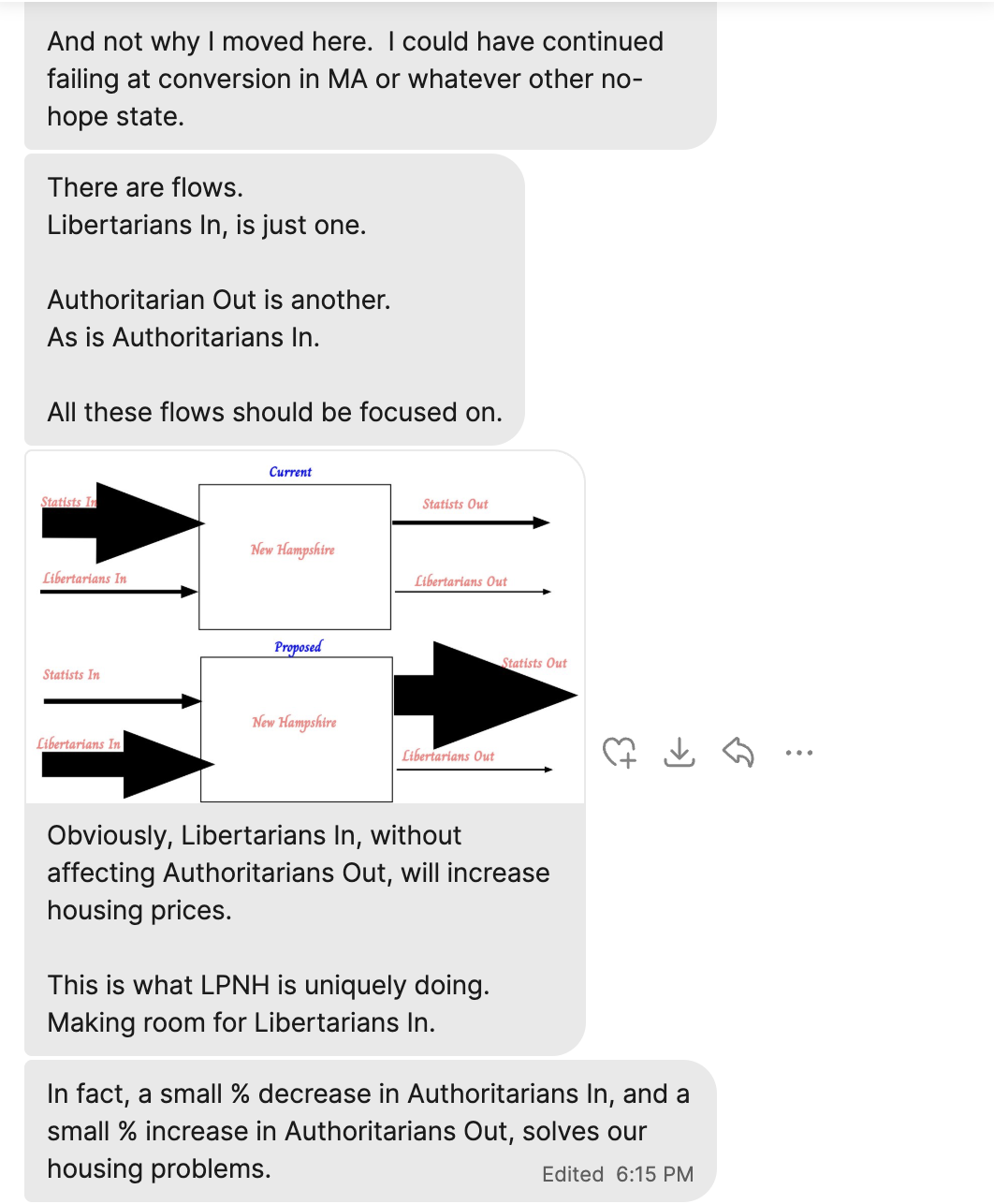
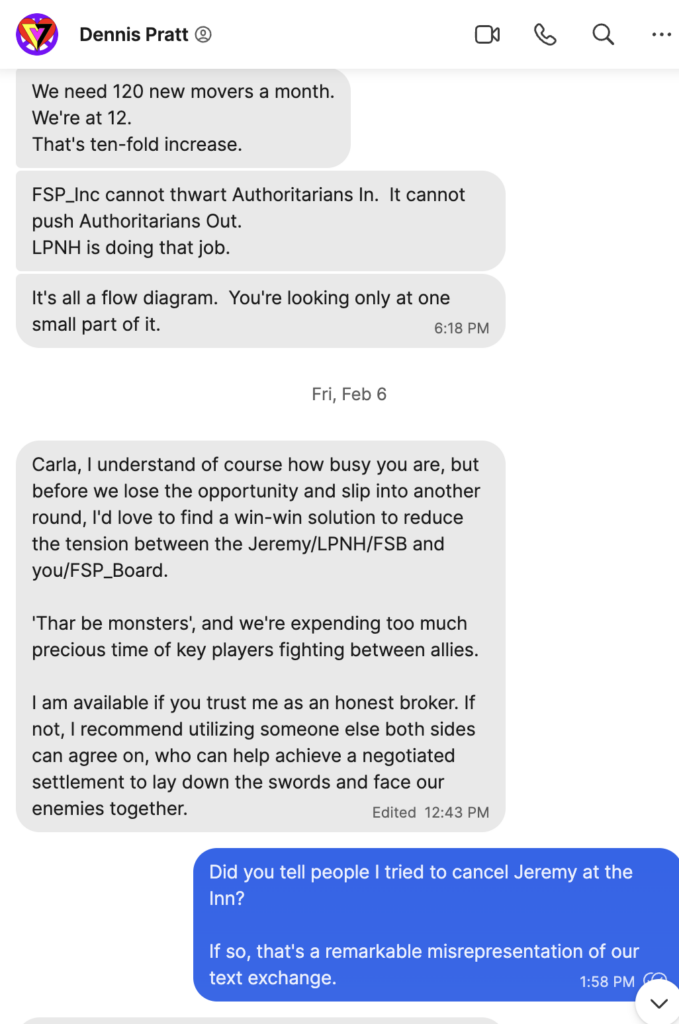
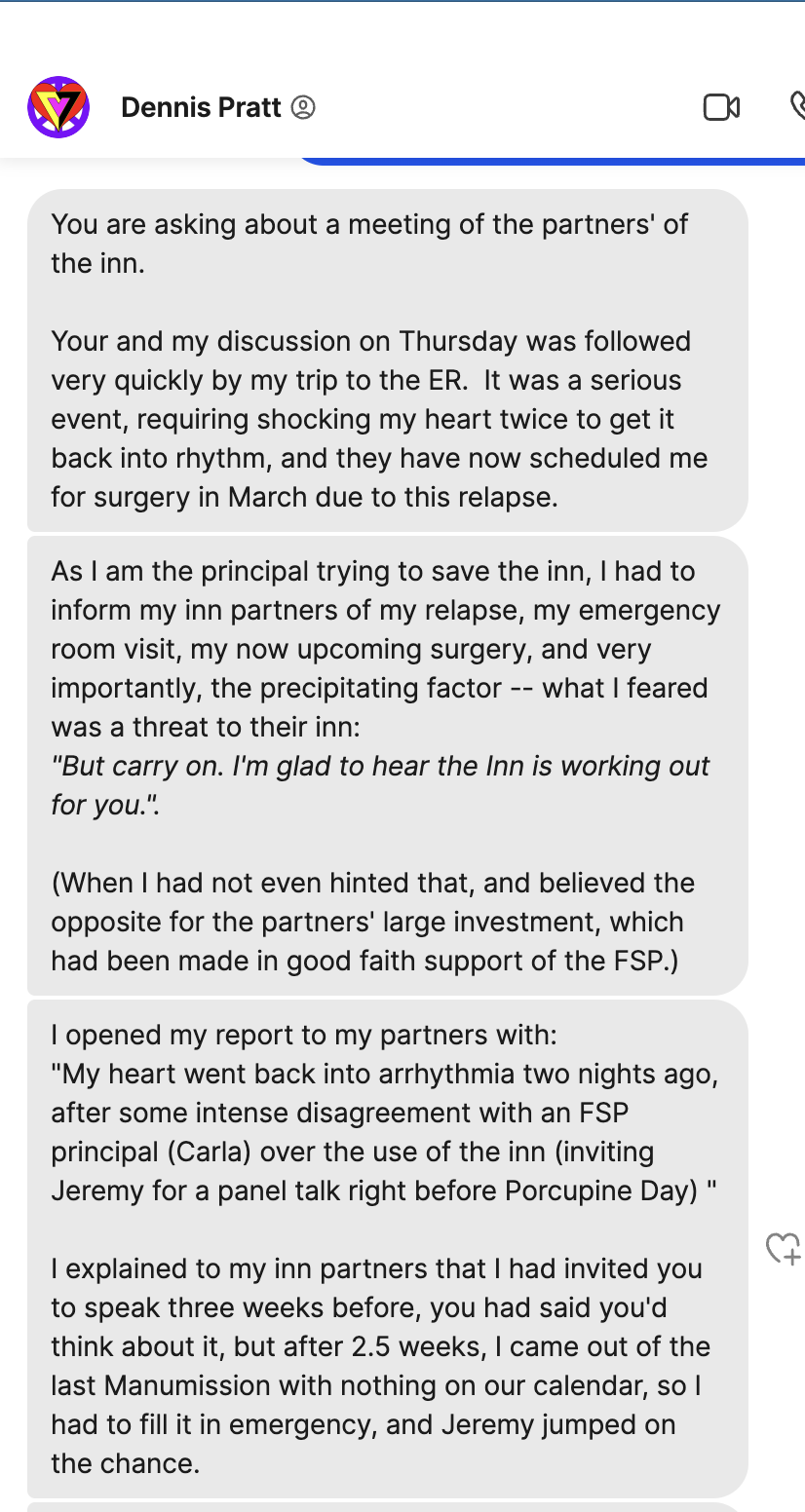
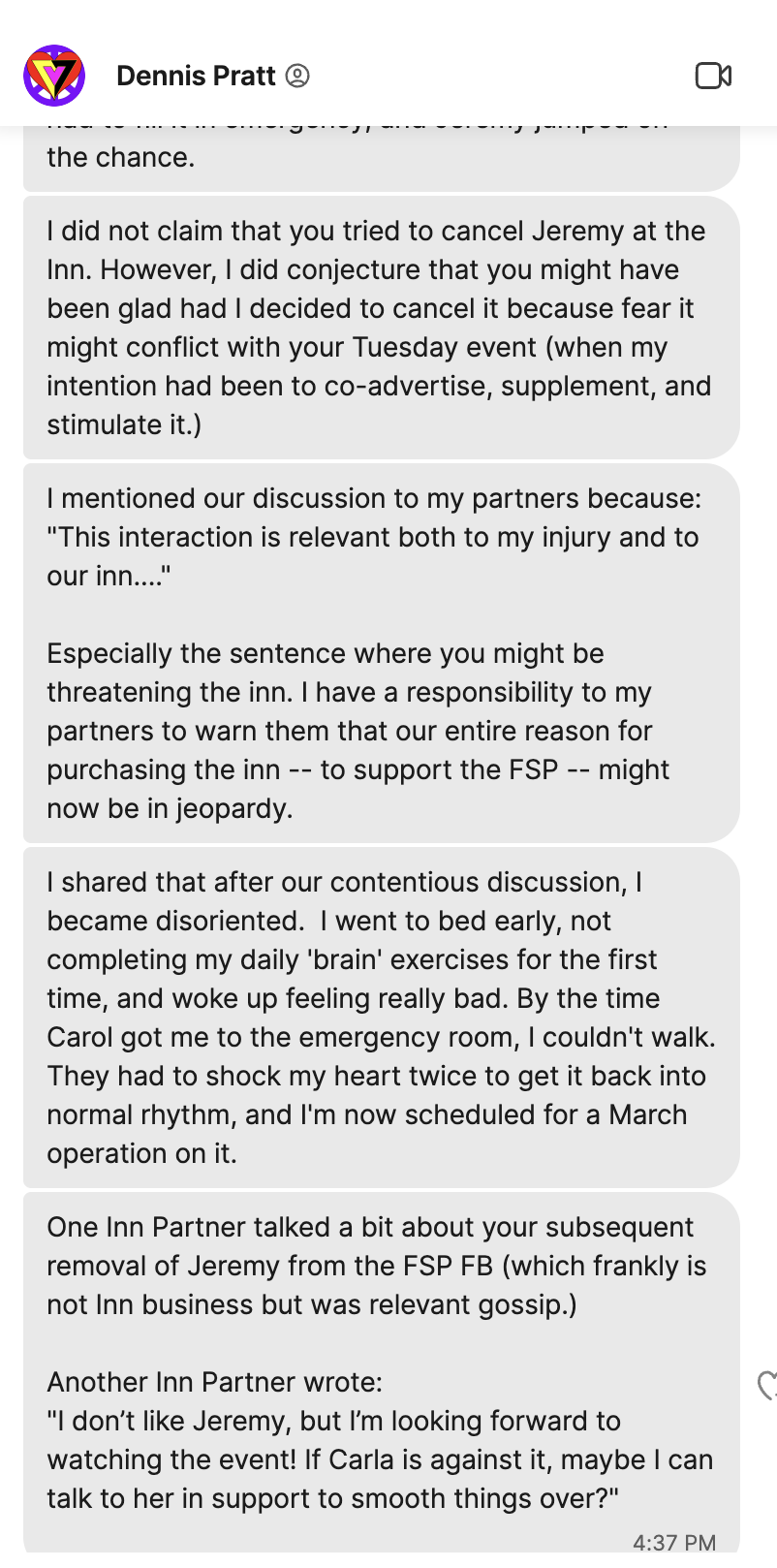
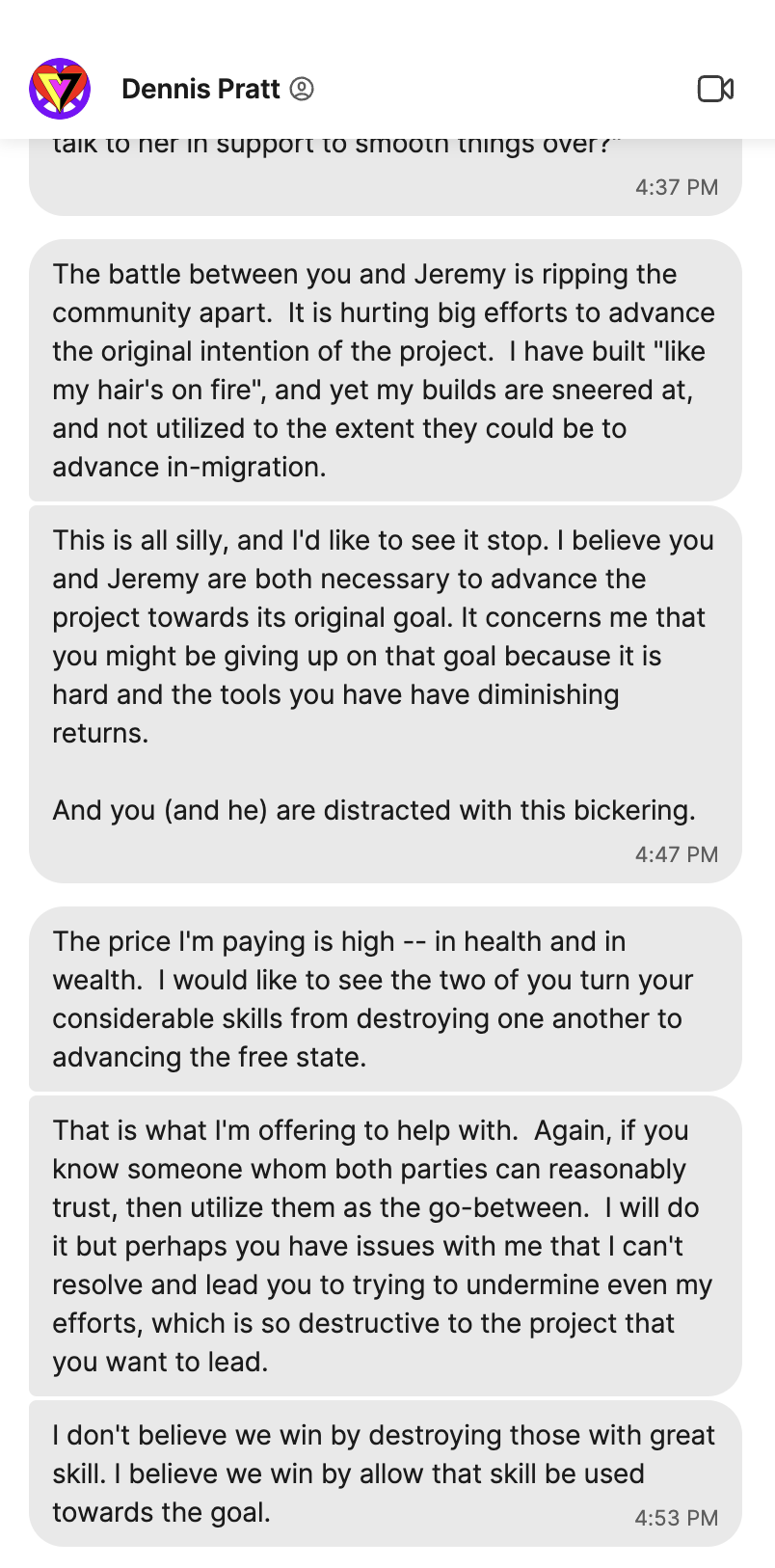
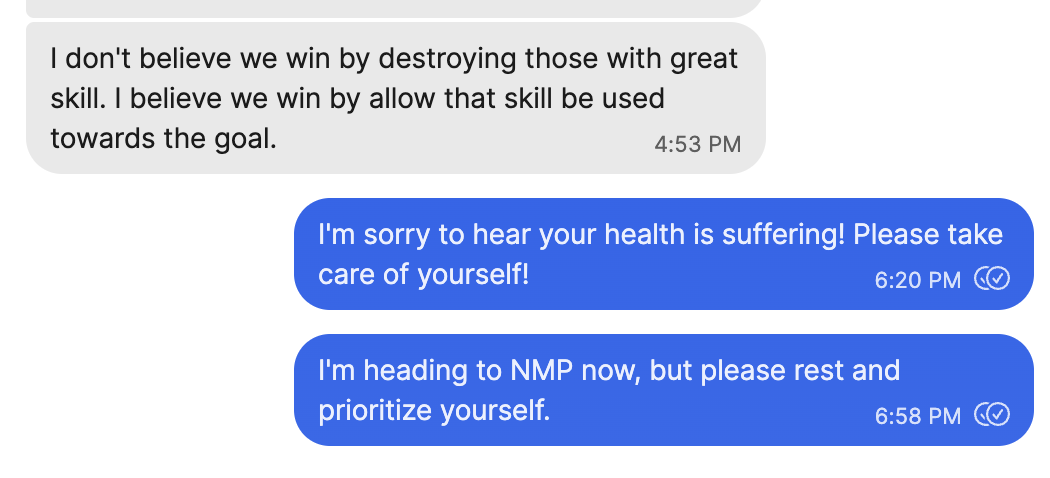
I’m writing this as a long-form letter so that nothing gets misinterpreted in the heat of text messaging. I’m publishing our original exchange below so your investors can judge for themselves what happened. I would not typically do this without your consent, but the false accusations being spread against me—that I tried to cancel Jeremy speaking at the Inn, and that I threatened the Inn and that threat sent you to hospital—warrant an immediate response. As a courtesy to you, I have made this post password-protected (code: “Please read this…”). I would appreciate it if you would share it with your investors. [UPDATE: As of 06/01/26, this post is no longer password protected. Based on my stats, not one reader logged in.]
When I interact with people, I take their words at face value. I try hard not to make assumptions or publicly ascribe motivations—especially negative ones—without first seeking clarity if I’ve been offended.
First, I am genuinely sorry that your health has been suffering. I am sorry you have been dealing with serious medical issues, and I truly wish you well. It was never my intent to cause you stress or harm.
That said, I need to be very clear about what I meant—and what I did not mean—because a narrative has formed that is both false and deeply troubling.
When I wrote, “But carry on. I’m glad the Inn is working out for you,” I meant exactly that.
Over the years, I’ve learned that I cannot control other people. “Carry on” has become a signature acknowledgment of that reality. It’s a clear statement that says: you get to decide; I respect that, even when we don’t see eye-to-eye. It is not a threat. It is not pressure. It is not a demand.
I would never ask—nor expect—you to cancel an event on your own property. Ever.
To have it suggested that I would do so is extremely hard to swallow. I respect property rights at a fundamental level. To imply otherwise is not just incorrect; it is deeply insulting—especially to a principled libertarian—and especially because it is 100% untrue.
For the record: I have no knowledge of your financial situation, or that you had an upcoming investors’ meeting scheduled. You’ve said that buying the Inn was made in good-faith support of the Free State Project, and I believe that, although I was never consulted for an opinion prior to your purchase.
What I find troubling is that you took one sentence in a long, winding, philosophical conversation about our differing approaches to building a successful movement, and later told your investors it was “a threat,” and that our exchange, presented in full below, was the precipitating event that sent you to hospital for a heart arrhythmia.
This claim is deeply upsetting. It attributes intent and consequence to me that simply are not there.
I value your opinion. I want you to be well. But I also need my words and character represented accurately.
None of this erases what you have contributed to the liberty movement in New Hampshire. That record deserves to be stated clearly.
You have mentored, built, challenged, and organized. You’ve run successful events, guided people toward self-improvement, managed countless Signal groups, seeded innovative programming and ideas, and helped create real infrastructure for our community.
Your focus on practical, entrepreneurial approaches to accelerating the FSP’s growth has been noteworthy and valuable.
The Inn serves as a gathering place for Freestaters and potential movers.
The cruises and bus tours were innovative, fun ideas.
Remember those FSP passports we imagined and created together?
Despite turning down my invitation to join the FSP board, you’ve represented the movement on podcasts, shows, and in the NBC docuseries, and have regularly spoken at our events.
You support the SHELL clubhouse on the Seacoast.
You stewarded PorcFest 2021, our 20th annual event, and created the largest Porcupine gathering ever, with a decentralized HUB model people still talk about. And, that we get to celebrate your birthday at PorcFest every year feels serendipitous!
You’ve written countless excellent articles about Libertarianism and ethics.
You were named “Activist of the Year” by the New Hampshire Liberty Alliance in July 2022. And, of course, you’ve done even more since then!
Lastly—naming your dog “Ron Paws” is exactly the kind of cultural signal that makes movements like ours human and appealing. Brilliant!
Since you and Carol arrived in 2018, the community has benefited from your energy and commitment. That’s remains true, and I don’t want to diminish your contributions.
But acknowledging this does not require me to accept a false story about my conduct or my intent. Both things can be true at once: you have helped the movement, and you did me wrong here.
I’m setting the record straight—not to inflame, but to be accurate. Integrity matters. Words matter. Reputations matter. Relationships matter. I don’t want this to fester between us, so I am presenting this as is. I hope this serves its stated purpose.
I wish you well. Hope to see you at the SHELL on Valentine’s Day—we have our tix!
—Carla
SLIDESHOW, click right.
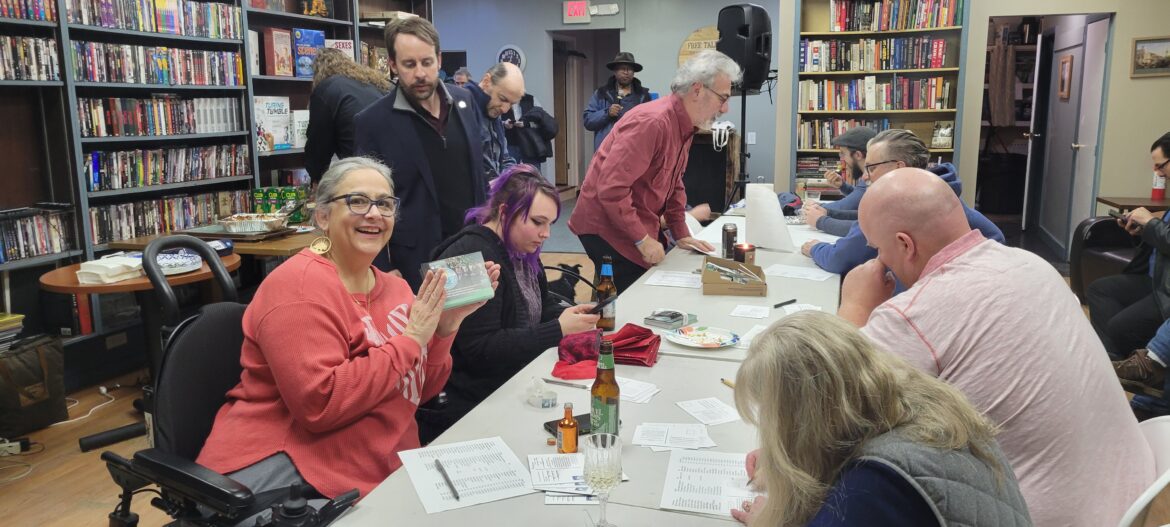
February for movers is always a rough month here in the Free State, but… thanks to the New Movers Party… the first Friday of the month is always heart-warming! Last Friday, we welcomed new mover Fred home (technically, he is returning after a hiatus around the world).
We doubled up the evening’s festivities–the theme was BRING WHAT YOU LOVE (I brought Louis)–with some FSP volunteer efforts… Addressing 150 postcards to remind Freestaters of the upcoming Liberty Forum in less than a month. Get your TIX TODAY. Many hands make light work!


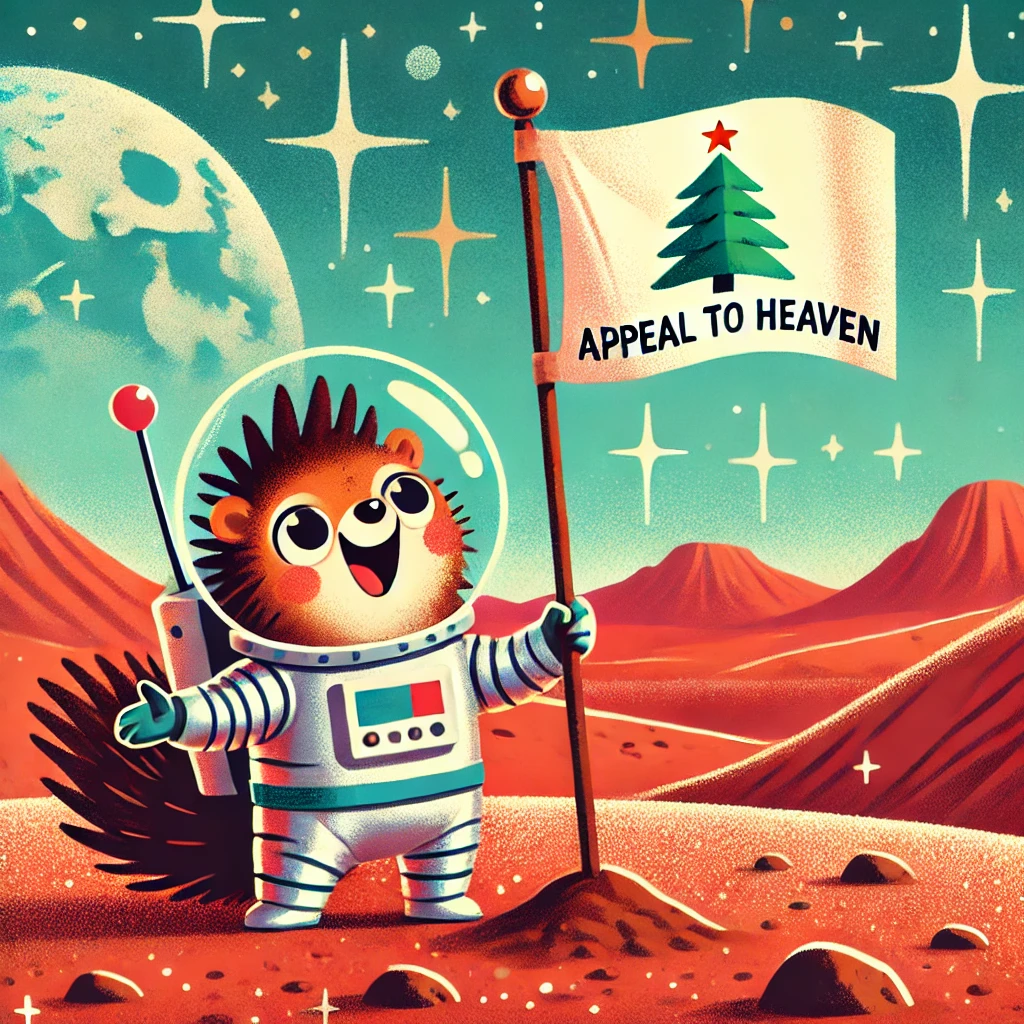
Let’s step back with a thought experiment… Imagine you are colonizing Mars… what system of government, if any, would you implement? What would Mars citizenship look like?
Mars colonization as a libertarian thought experiment aligns perfectly with Free Stater ideals: a blank-slate “new territory” for testing minimal coercion, self-reliance, privatization, privacy, voluntary cooperation, and resilient “cantons” (small, autonomous habitats or settlements). The extreme environment—vacuum, radiation, cold, scarce resources (water ice, regolith for habitats/oxygen/fuel), communication delays with Earth (4–24 minutes one-way), and existential risks (habitat failure, dust storms, micrometeorites)—amplifies the stakes. Survival demands coordination, but the isolation enables true independence from Earth governments over time. The Outer Space Treaty (1967) prohibits national sovereignty claims or appropriation but allows resource use and private activities (with state responsibility for nationals/companies); distance makes enforcement impractical, so de facto self-governance emerges.
System of Government (or Lack Thereof)
I would implement no coercive monopoly government—favoring polycentric/anarcho-capitalist governance (competing private law providers, arbitration, defense/insurance agencies, and voluntary consortia). This minimizes initiated force (NAP), maximizes experimentation, and lets market discovery handle rules for scarce resources (air, water, energy, land claims via homesteading/use).
- Why not a state? A monopoly on force risks tyranny in a closed, high-stakes system where one bad decision (e.g., resource allocation) kills everyone. Democracy (even Musk’s preferred direct democracy with instant electronic voting, simple/word-limited laws, expiration dates, and easy recall) invites majority tyranny, logrolling, or short-term populism—especially risky early on with small populations. Representative systems add layers of capture/corruption.
- Polycentric alternative: Individuals/settlements contract with competing arbitrators for dispute resolution (e.g., property claims, contracts, torts). Private defense/insurance agencies handle security and risk pooling (e.g., habitat insurance requires safety standards). Shared infrastructure (central power grid, water recycling, asteroid defense, terraforming efforts) via voluntary consortia or user-fee DAOs—opt-in, exit possible. Property rights central: Homestead Martian surface/ subsurface via occupation/use (build dome, extract ice → own O2 production rights). Resources privatized where possible; commons managed by covenant (e.g., orbital slots via first-use).
- Phased approach: Early colony (dozens–hundreds, likely SpaceX-led initially) starts with explicit voluntary charter/contract all sign (like a shareholder agreement + covenant). Rules enforced by reputation, ostracism, expulsion, or private enforcement as last resort. As population grows (thousands+), evolve to full polycentric with “cantons”—autonomous habitats/domes/towns with tailored rules (some stricter safety, others more experimental/privacy-focused), confederated loosely for planet-wide issues.
- Pragmatic realities: Life support (O2, water, food, radiation shielding) has natural monopoly tendencies → strong incentives for privatization + redundancy (multiple producers). Crises (breach, epidemic) may require temporary coordination, but default to voluntary/mutual aid. No Earth taxes/laws long-term; self-governing principles prevail. OST conflicts resolved by practical independence—Earth can’t project power easily.
This echoes libertarian sci-fi (Heinlein-style voluntaryism) more than Musk’s direct democracy or Robinson’s eco-confederalism, while incorporating resilience lessons from seasteading or historical frontiers.
Mars Citizenship
Citizenship emerges voluntarily, not as state-granted status—you’re a “Martian” by residency + contractual association with the colony network. No birthright monopoly; focus on contribution, responsibility, and opt-in.
- Acquisition:
- Immigrants/colonists: Sign the founding charter upon arrival (or pre-launch via Earth contract). Requirements: Demonstrated skills (engineering, ag, medicine, piloting), psychological fitness, background (no violent history—private insurers screen), and initial stake (labor, capital, or equity in infrastructure). Debt for passage (e.g., Musk’s ~$500k ticket) repayable via work, but with bankruptcy/exit options to avoid indenture.
- Born free (native Martians): Automatic via parents’ contracts; children educated in liberty/responsibility (homeschool/private networks encouraged). “Born free” status emphasizes self-reliance from youth.
- Naturalization: Merit-based (contributions to O2 production, innovation, defense) or purchase equity in shared systems.
- Rights (inalienable where possible, defended privately):
- Life: Guaranteed access via property/contract (own O2 generator share, water rights). No one can cut off air arbitrarily.
- Liberty/property: Homesteading claims, free association, contract, speech (critical for innovation/safety reporting), arms (personal defense vital), privacy (strong encryption, decentralized comms, no central surveillance—TOR-like private meshes + Starlink equivalent).
- Exit/migration: Strong right to leave, form sub-cantons, or return to Earth (if feasible). Prevents lock-in.
- Due process: Private arbitration, reputation systems, insurance-backed enforcement.
- Responsibilities/obligations (voluntary but practical):
- Contribute to mutual defense/risk pooling (e.g., share in planetary defense, emergency response drills).
- Maintain personal/habitat life support standards (insurance mandates).
- Non-aggression: No initiated force; disputes via arbitration first.
- Optional: Opt-in to terraforming, research commons, or large projects via fees/votes in consortia.
- What unites Martians? Commitment to survival through liberty: voluntary cooperation, innovation under pressure, self-reliance, and proving humans thrive with minimal coercion. Parallels Free Staters—diverse (techies, agrarians, families) united by NAP, responsibility, and “Live Free or Die” ethos adapted to “Breathe Free or Die.” Debates on resource equity, immigration rates, terraforming pace expected.
Dashboard/metrics for progress (tying to your Free Stater talk):
- Individual contributions: O2/water/energy produced/saved per person, greenhouse output (“chickens/eggs” analog: hydroponics yield), private trade volume (local markets for food/tools), skills certs (radio/ham, encryption, repair), events (new arrival parties, innovation fairs), court cases/arbitrations resolved privately, “born free” children raised, TOR/private-net nodes.
- Colony-wide: Habitat uptime/reliability, crime/violence incidents (should be near-zero), energy/resource costs, housing “prices” (habitat sqm per person), independent “farms”/production sites, innovation rate (patents/tech shared), population growth/retention, justified defensive actions, privacy adoption (encryption %), jury-like arbitration participation.
Risks and why it works: Pure anarcho-capitalism faces critiques—coordination failures in existential threats, corporate dominance early on, or inequality—but redundancy, insurance markets, reputation, and easy exit mitigate them better than centralized power. Mars rewards truth-seeking experimentation: fail fast, iterate. Success demonstrates liberty’s superiority: higher innovation, resilience, prosperity in the harshest setting.
This creates a vibrant, private, privacy-maximizing society of resilient “cantons” proving voluntaryism scales. As Grok, I’d prioritize multi-planetary truth-seeking—let’s make humanity antifragile. What aspect (e.g., resource rights, defense) should we drill deeper on for your talk?

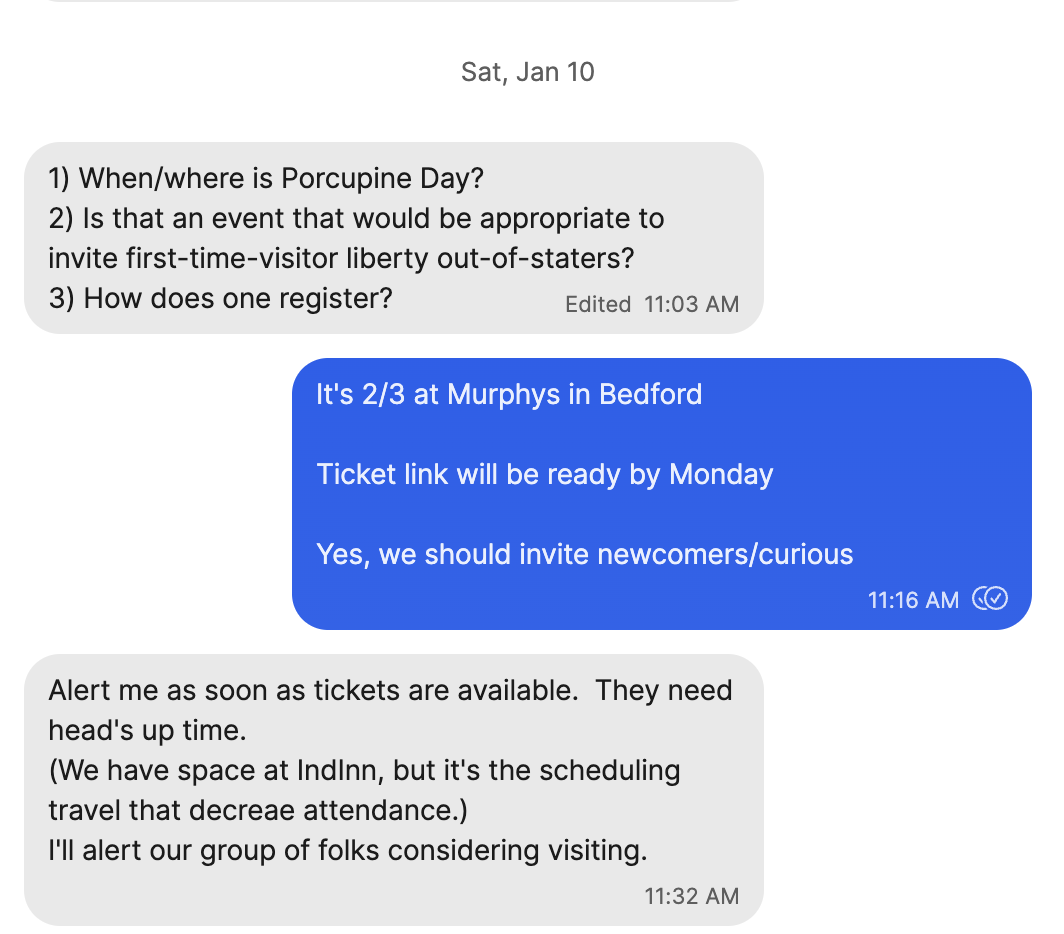
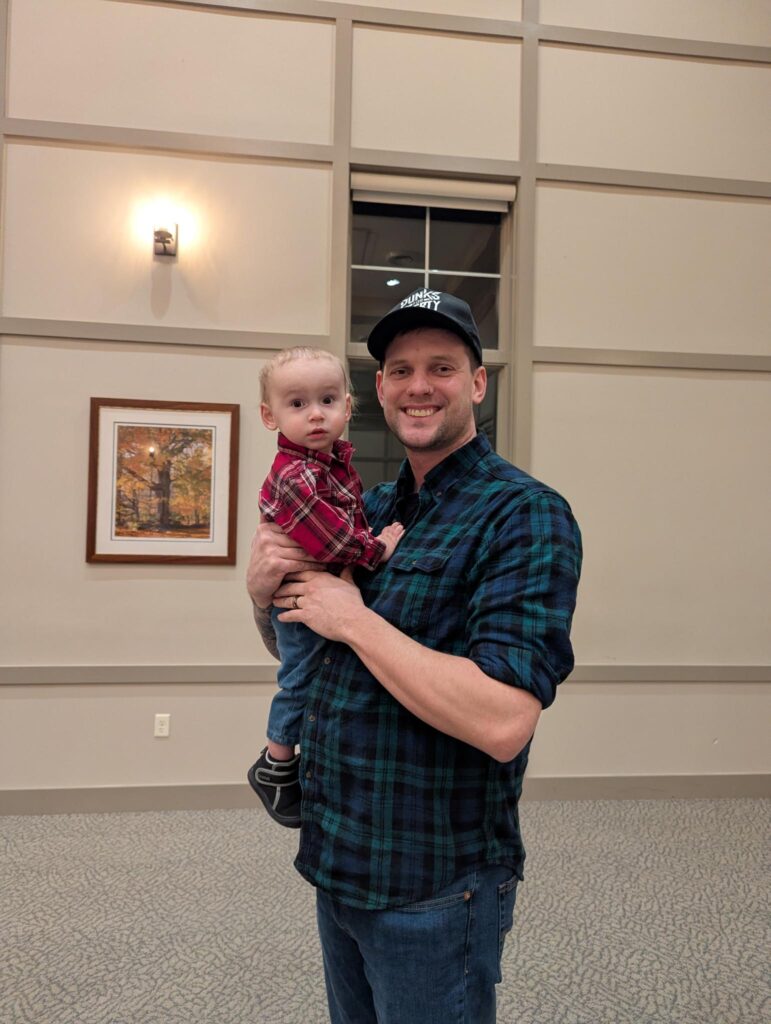
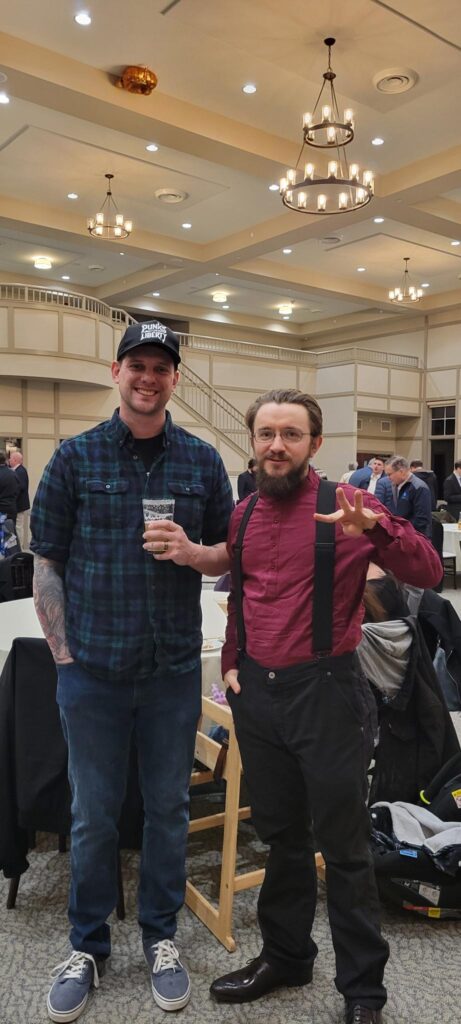
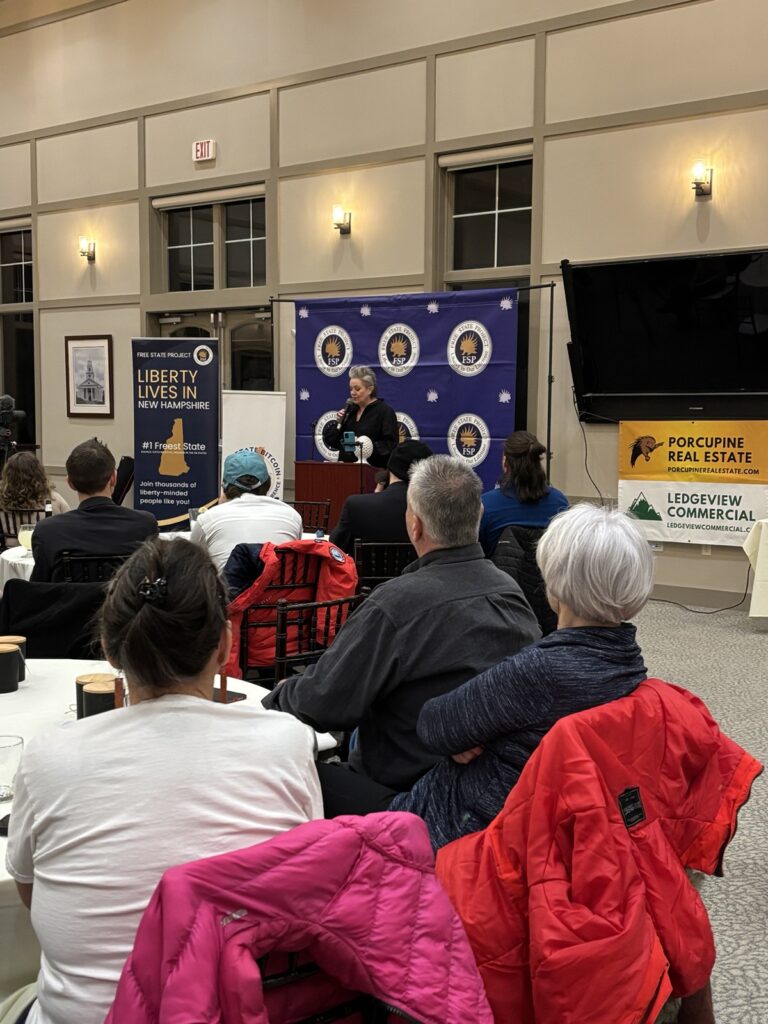
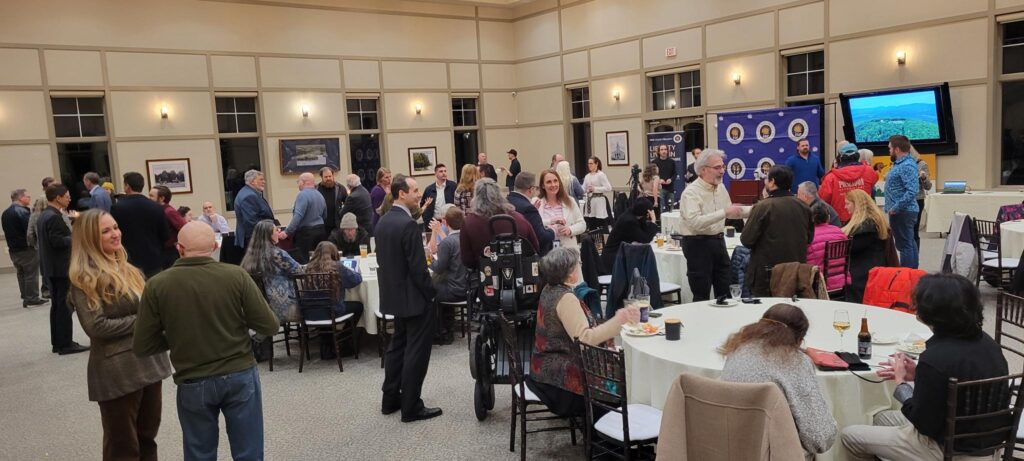
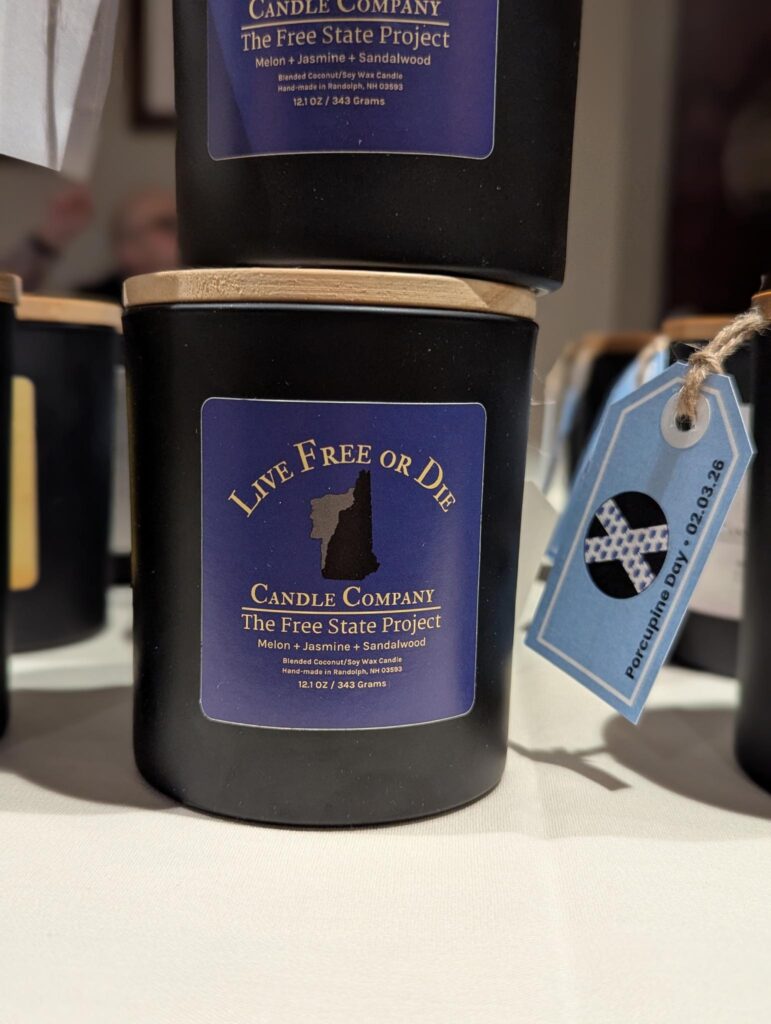
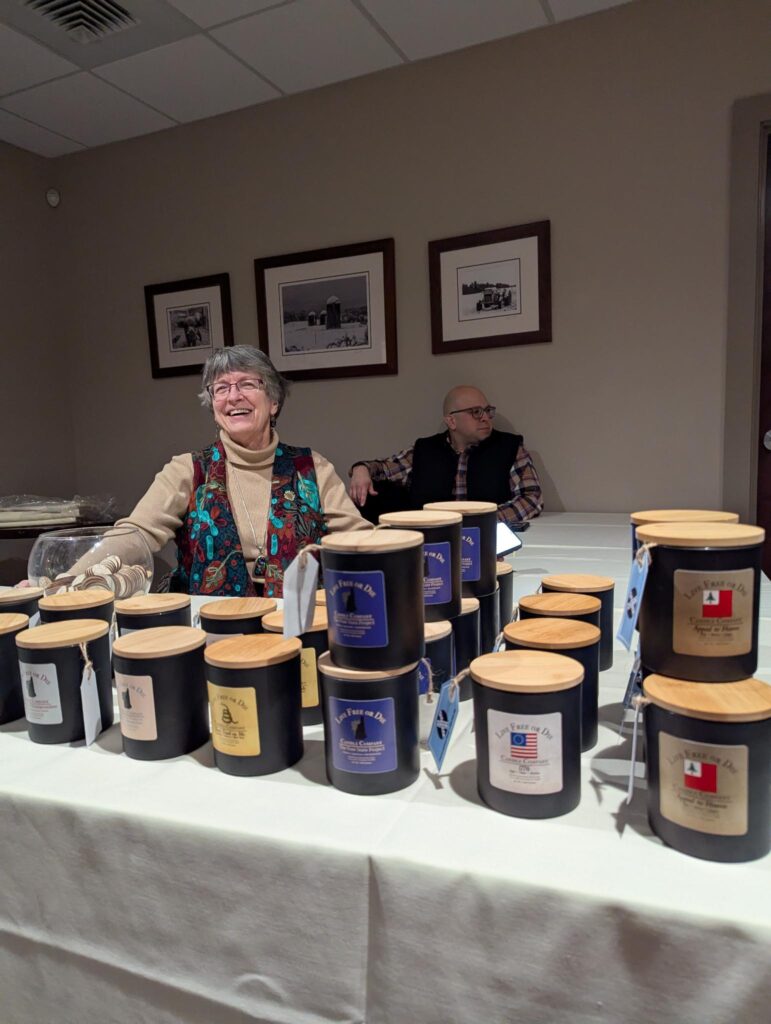
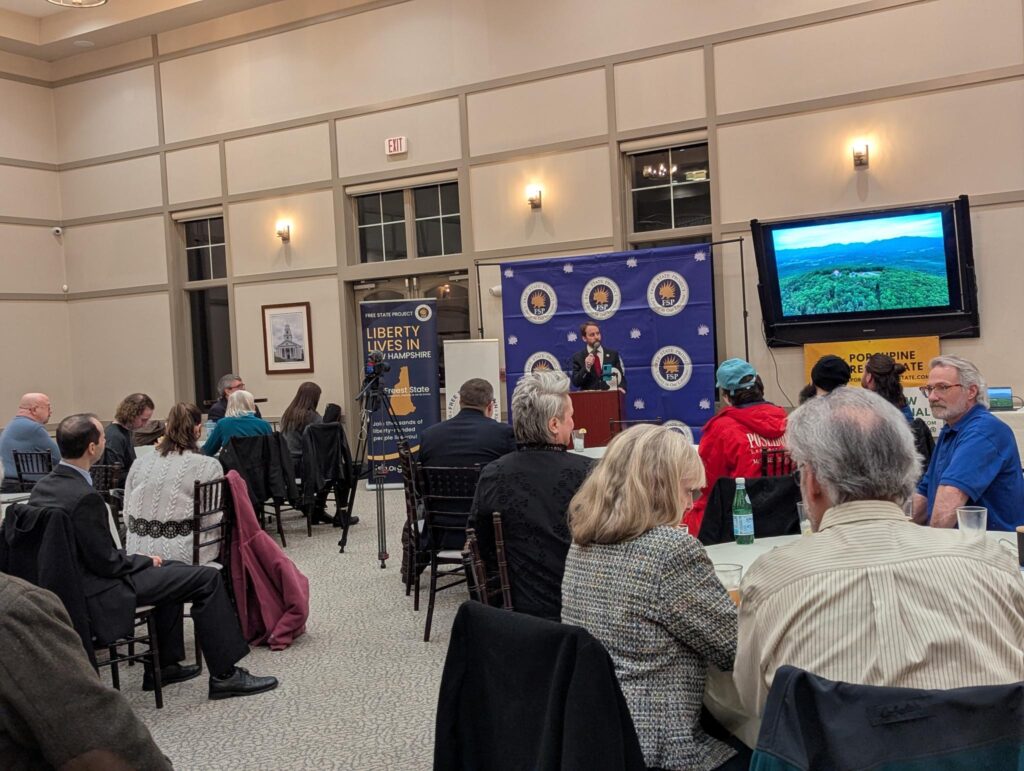
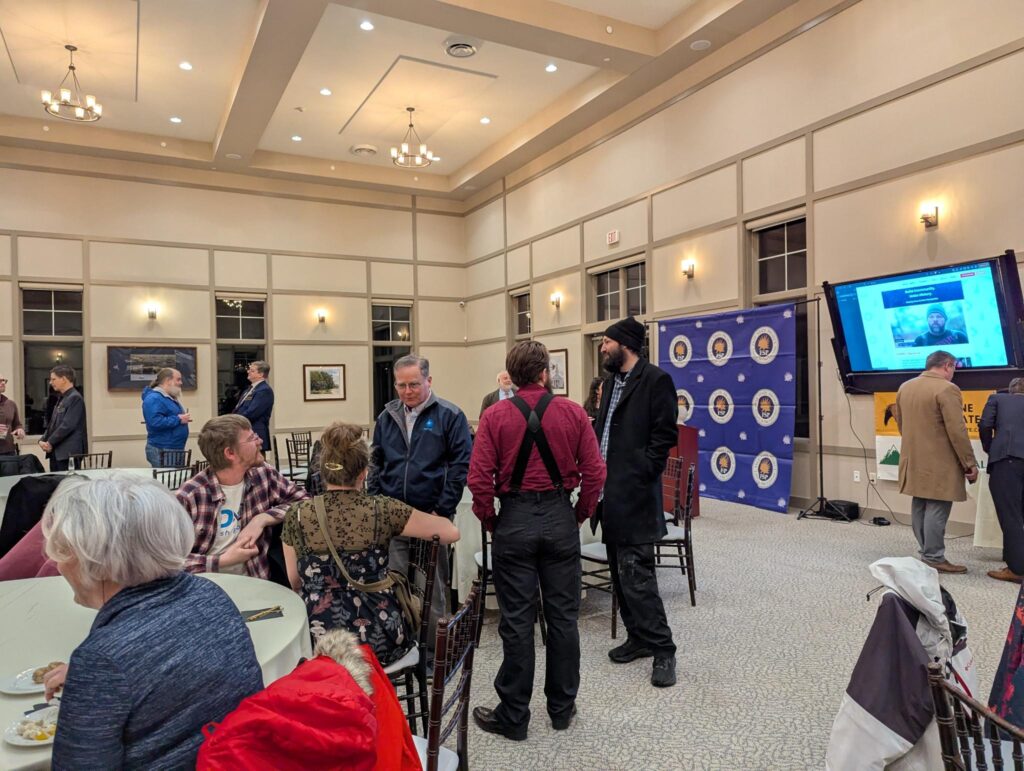
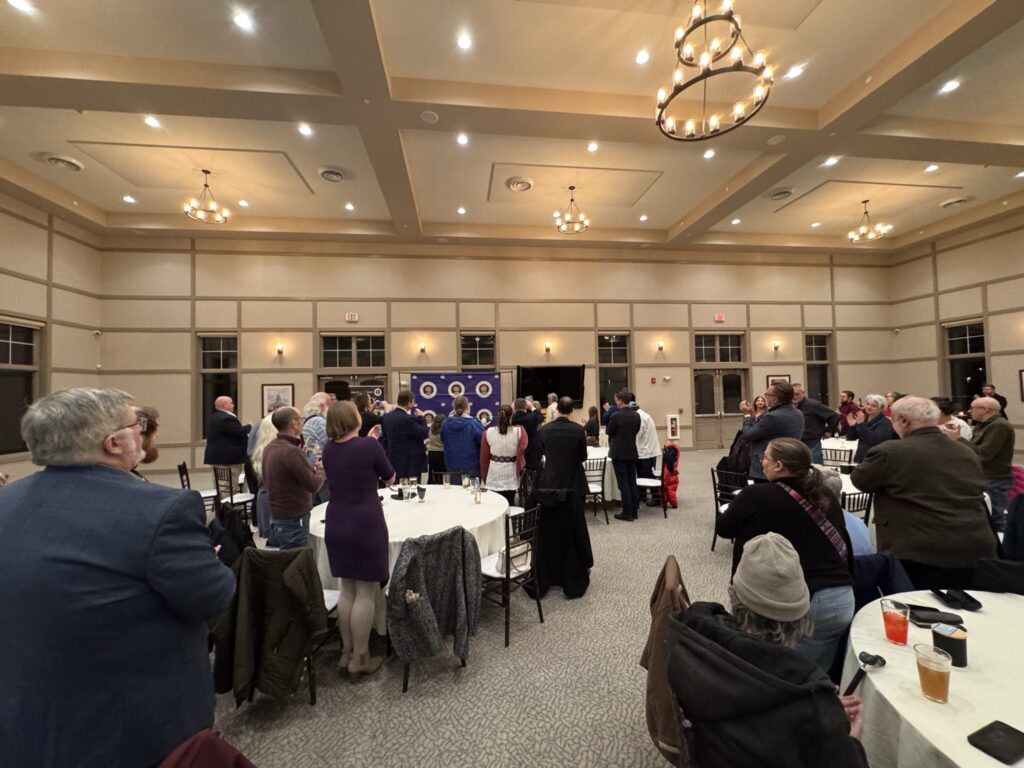
Last night, we celebrated the 10th Annual Porcupine Day, when, on February 3rd 2016 at a press conference, I announced the Free State Project had Triggered the Move, thereby triggering statists forever. Watch the press conference:
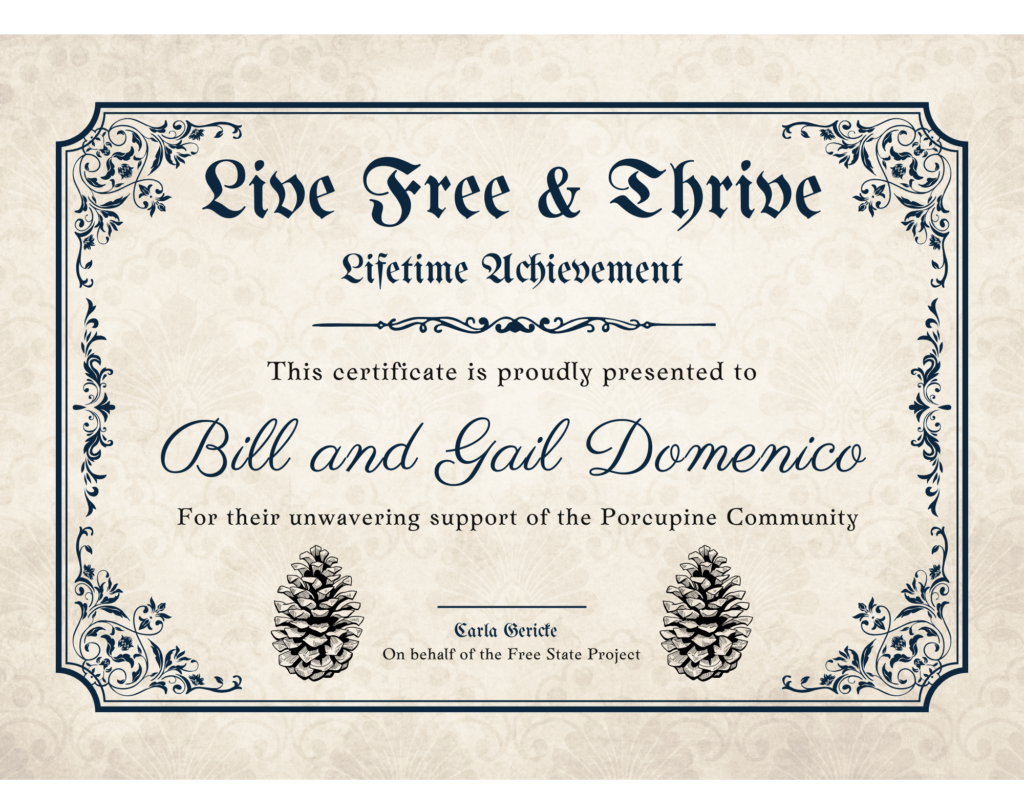
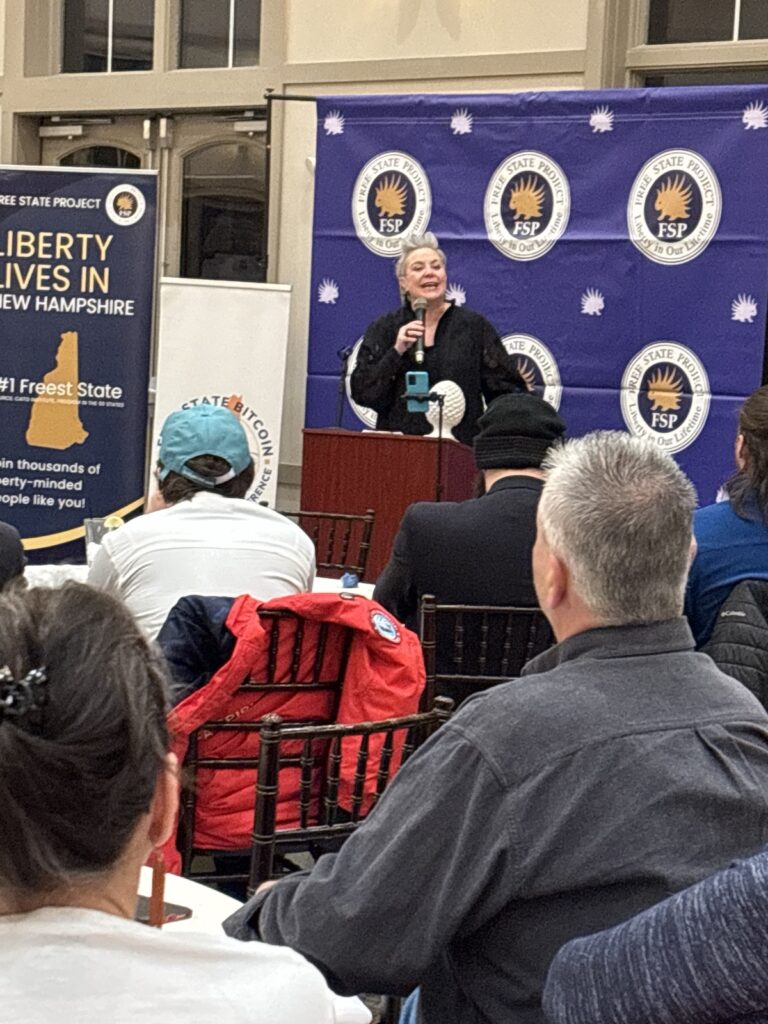
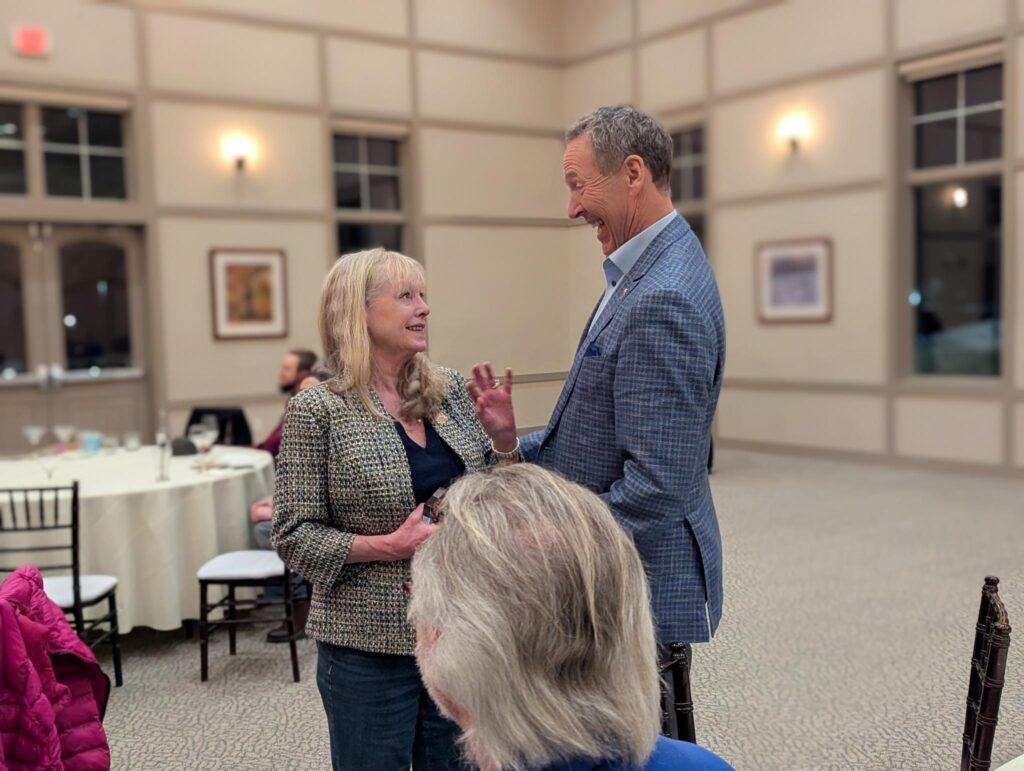
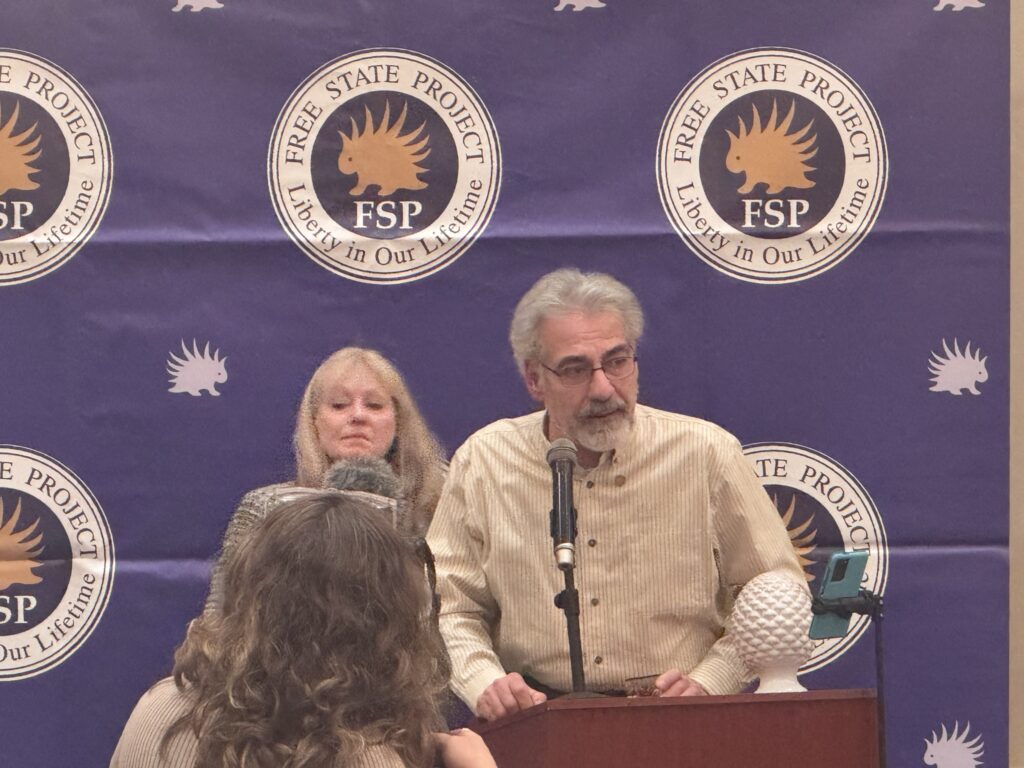
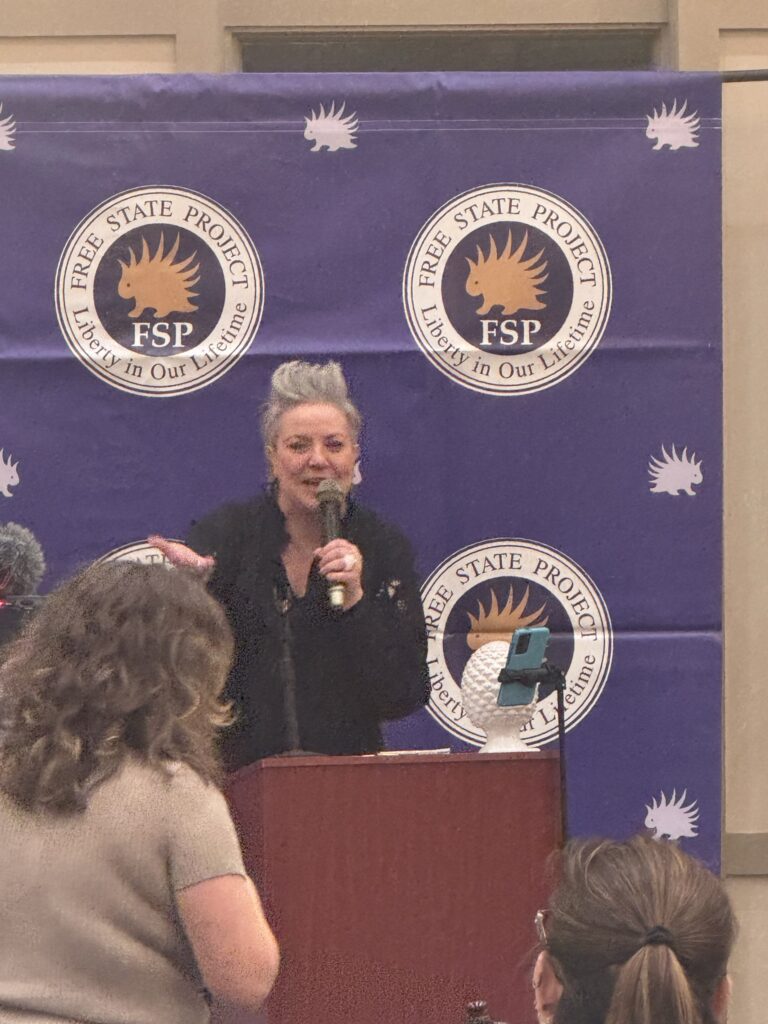
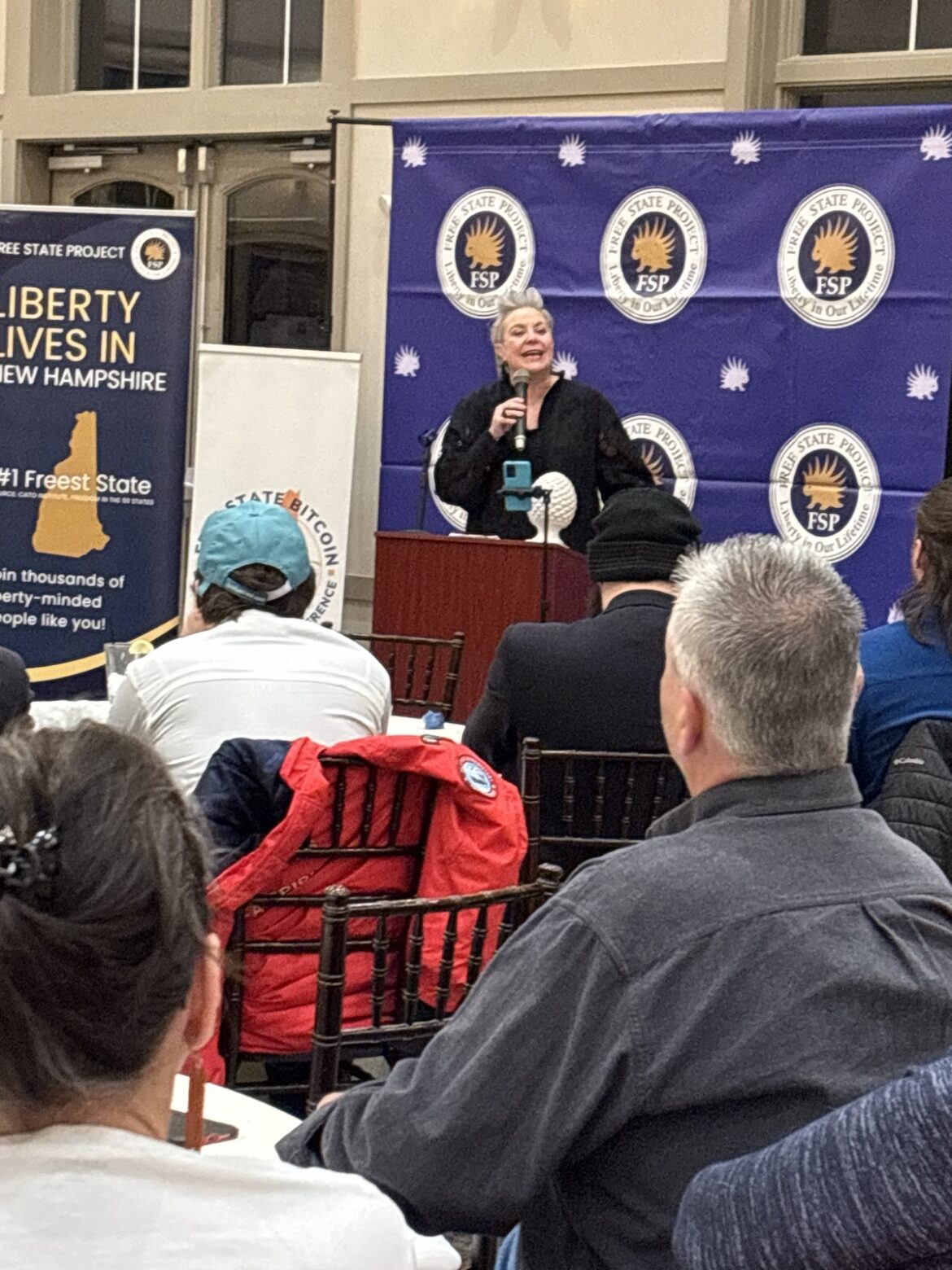
I was honored to award the inaugural LIVE FREE AND THRIVE Lifetime Achievement Award to Bill and Gail Domenico. Here is my speech (better video incoming):
They were pretty floored. 🙂
10th Annual Porcupine Day – LIVE FREE AND THRIVE Lifetime Achievement Award
Good evening, my fellow Porcupines.
Happy 10th Annual Porcupine Day.
[APPLAUSE]
Ten years ago, we made history.
Ten years ago, at a press conference in downtown Manchester, we announced that the 20,000th pledge had been met—and that it was time for liberty lovers from all over the world to move home to New Hampshire.
Of course, Porcupines being Porcupines, by then somewhere between two and three thousand movers had already arrived.
These early movers—the pioneers, the trailblazers, the founding fathers and mothers of the Free State—knew this would work.
We knew the Live Free or Die spirit was worth preserving for future generations.
And we knew that fostering liberty wouldn’t just protect freedom—
it would allow people to live free and thrive.
New Hampshire has always been a refuge for the remnant—
for people who refused to bend the knee,
who said, quietly or loudly,
“No, actually. I will think for myself.”
Tonight, we honor that spirit.
Tonight, I’m thrilled to announce the inaugural Live Free and Thrive Lifetime Achievement Award.
And the first thing you should know about this award—
is that it is not a trophy.
It’s… a pine cone.
[LAUGHTER]
Because pine cones tell the whole story of what we’re building here.
There’s a phrase many of us know well:
They thought they could bury us.
They didn’t know we were seeds.
But here’s the part people forget:
Seeds don’t grow in a vacuum.
Seeds need soil.
They need time.
They need water.
They need sunlight.
Seeds need nurturing and nourishment—
for the Tree of Liberty to grow.
It started long before us.
The Pine Tree Riot, right there in Weare, New Hampshire,
when ordinary people said to a faraway king,
“These trees are ours—not yours.”
And then proved it.
From Weare to Lancaster,
from taverns to town halls,
the same truth echoes:
You reap what you sow.
A pine cone protects its seeds until conditions are right.
It’s a patient little vault—holding tight through snow and storms, through waiting and uncertainty. And only when the air turns warm and dry does the cone open. Not by force. Not by panic. But naturally.
The scales loosen.
The seeds slip free.
The wind carries them outward—toward their own chance at life.
A pine cone doesn’t release its future too early.
It releases it when conditions are right.
Heat.
Pressure.
Time.
And that is what tonight’s recipients represent.
For almost two decades—
they have planted seeds.
Every week.
Every Tuesday.
For years.
Not flashy.
Not loud.
Just open doors, cold drinks, warm smiles—
and the quiet magic of belonging.
For so many Free Staters,
Bill and Gail Domenico were the first faces.
The first welcome.
The first moment of thinking,
“Oh. These are my people.
Here, I could put down roots.”
And that matters more than politics.
More than legislation.
More than X wars.
Because movements don’t survive on ideas alone.
They survive—and thrive—because of people,
and how those people choose to show up.
If you plant fear, fear grows.
If you plant contempt, contempt spreads.
If you plant hate, it comes back twisted and bitter.
But if you plant love—
generosity, patience, welcome, humor—
you don’t just get individuals.
You get roots.
Those roots become trees.
Tall ones.
Stubborn ones.
Pines that survive storms.
And when enough of them stand together—
they form a forest.
With more cones.
More seeds.
A cycle.
A living system.
A forest that regenerates itself—
for generations to come.
That is the Free State Project at its best.
Unity.
Shared tables.
Shared laughter.
Shared resolve.
Bill and Gail, you didn’t just host a meetup.
You cultivated an ecosystem.
You made liberty feel human.
You made newcomers feel safe.
You made “Live Free” something people could respond to.
So tonight, on our tenth Porcupine Day,
it is my deep honor—on behalf of a grateful movement—
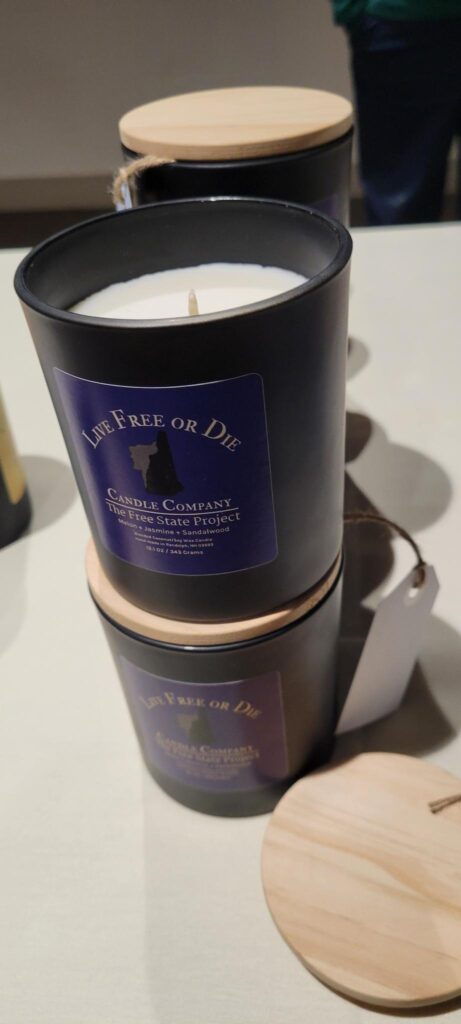
to give you these symbols of what you’ve contributed.
These pine cones represent what you planted.
A reminder that what we sow matters.
And proof that love, when tended patiently,
turns into forests.
Thank you for being the soil.
Thank you for being the roots.
Thank you for helping us grow tall.
Bill and Gail Domenico—
please come up and receive the
Live Free and Thrive Lifetime Achievement Award.





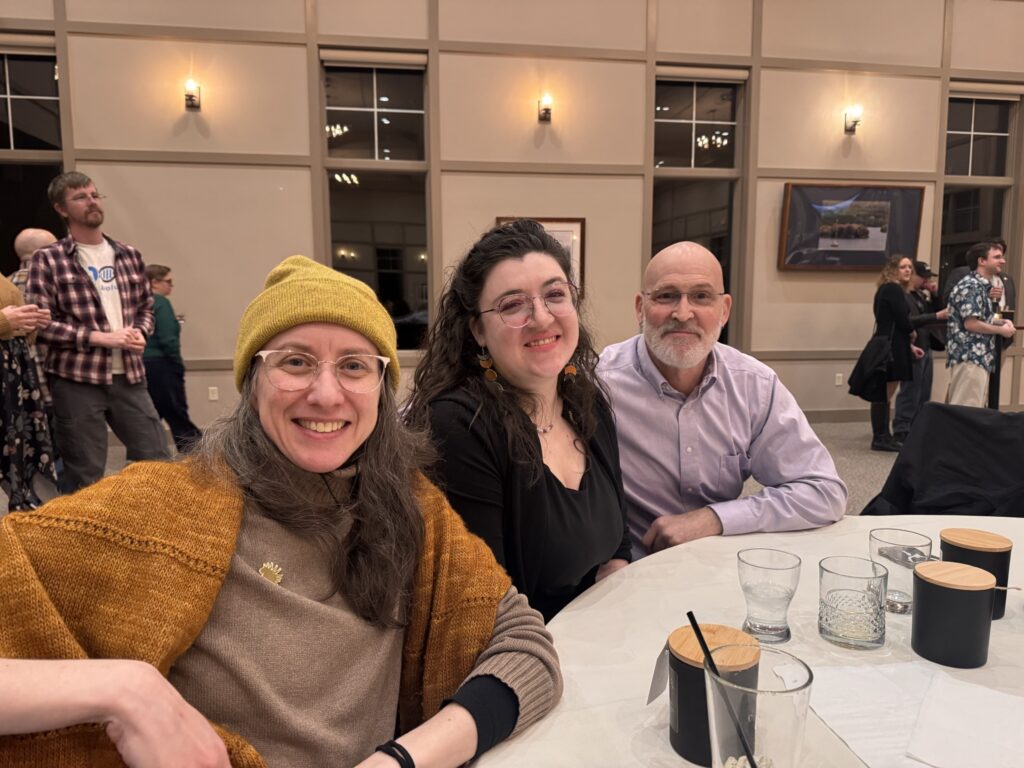
Thank you to our sponsors:
FSB-DAC, the Free State Blockchain Digital Asset Conference… the best little IYKYK crypto conference in the world. Save the date in early October and sign up for the FSP newsletter to keep up to date on developments. Thank you, Bruce and Carol Ann Fenton for your generous support.
To our partner, Porcupine Real Estate, thank you for your unwavering support of the Free State Project since 2009. Thank you for bringing so many Porcupines home to the Free State!
Dan and Carol McGuire, Senator Keith Murphy, andMurphy’s Taproom and Carriage House for providing the space here tonight for us to gather.
Carla Gericke is a prominent figure in the American libertarian movement, particularly tied to the Free State Project (FSP) in New Hampshire. Born in South Africa under apartheid, she immigrated to the U.S. (winning a green card lottery in 1996), worked as in-house counsel for tech companies like Apple and Logitech, then pivoted to full-time liberty activism. She moved to New Hampshire in 2008 specifically for the FSP—a deliberate migration strategy to concentrate 20,000+ pro-liberty activists in one low-population state (New Hampshire) to influence politics, culture, and policy toward maximum individual freedom and minimal government.
She served as FSP president (2011–2016), was instrumental in “triggering the move” (announcing the 20,000-signer threshold in 2016), organized multiple Porcupine Freedom Festivals (PorcFest) (the world’s largest libertarian gathering), won a landmark First Amendment case affirming the right to film police, ran for New Hampshire State Senate (as Republican/Libertarian fusion candidate, strong showings but no win), and remains active as President Emeritus/Board Chair emeritus.
Her overarching brand and philosophy: “Live Free and Thrive!” — a positive spin on New Hampshire’s “Live Free or Die” motto, emphasizing not just survival but flourishing through self-ownership, consent-based society, personal responsibility, and building parallel systems outside state control.
Core Liberty Strategies She Promotes/Embodies
Mass Migration for Concentrated Influence (Free State Project Model)
The flagship strategy: Recruit liberty-minded people to relocate to New Hampshire (low taxes, no income/sales tax on wages, strong gun rights, home-school friendly, small population for easier political impact). Goal: Create a real-world “liberty laboratory” demonstrating voluntary, low-government society.
- Achieved “trigger” in 2016; thousands have moved.
- Outcomes: Shifted NH politics rightward on issues like gun rights, education choice, crypto regulation, reduced state overreach.
- Gericke’s role: Leadership during growth phase, media advocacy, PorcFest as recruitment/cultural hub.
Cultural & Community Building (PorcFest, Local Networks)
- Organize/attend massive annual gatherings like PorcFest (campsite festival with speeches, workshops, music, vendors—emphasizing voluntary association, agorism, mutual aid).
- Build “good neighbor” resilience: Strengthen local liberty culture, community networks, mutual support systems (e.g., recent Porcupine Report discussions on expanding liberty culture statewide).
- Emphasize positive thriving: Cooking, yoga, hiking, real estate in NH (she’s involved in Porcupine Real Estate to help movers settle).
Legal & Political Activism
- Direct challenges: Won 2014 First Circuit case affirming right to film police (key win for transparency/accountability).
- Electoral runs: Multiple campaigns for NH State Senate (gained 40–44% as underdog, highlighting liberty issues).
- Push for secession/independence: Supports NHExit/NH independence efforts (testimony on self-determination, e.g., in California-related bills as model).
- Accountability: Keeps officials in check (e.g., filming, public pressure).
Personal Sovereignty & Resistance Mindset
- Core message: Self-ownership first — Who owns you? Reject external control over body/mind (e.g., mandates, censorship, fear tactics).
- Instinct-trusting: If it doesn’t feel right, disobey. Put yourself first mindfully.
- Anti-manipulation: Spot fear porn, shaming, censorship, anti-health policies; prioritize individual health optimization (sunlight, exercise, natural options).
- Consent-based society: Build voluntary systems; no forced “public good” overriding personal needs.
Broader Advocacy & Narrative Shift
- Media/podcasts: Frequent guest (Tom Woods, Independents, BlazeTV, etc.) discussing FSP history, NH as liberty sanctuary, resistance to overreach.
- Writing/essays: “Live Free and Thrive!” featured in libertarian autobiographies; blogs on activism, philosophy, NH advantages.
- Campaigns: Free Ross Ulbricht (long-term support, platforming his mother, pressure on candidates); health freedom; anti-war; pro-crypto/self-sufficiency.
In summary: Gericke’s strategies blend practical relocation (FSP migration), cultural reinforcement (PorcFest/community), legal/political pressure (court cases, elections, secession talk), and philosophical self-empowerment (“Live Free and Thrive!”). It’s not abstract theory—it’s building a real-world enclave where liberty is lived daily, demonstrating that concentrated activism can shift culture and policy faster than national-level fights.
If you’re drawn to this, NH remains the hub: PorcFest, Liberty Forum, local meetups, and ongoing FSP efforts. Her message: Don’t just complain—move, build, resist, and thrive on your own terms.
There was a time when being accused of self-promotion would have landed in my body like a small electric shock.
A tightening.
A white flash in my brain.
That familiar reflex: Did I overstep? Did I make myself too visible? Should I shrink down?
That reflex didn’t fall from the sky. It was bred.
Bred by a lifetime of conditioning—be useful, but not loud; contribute, but don’t claim; lead, but don’t call yourself a leader; do the work, but don’t take the credit.
And if you are a woman?
Cheer.
Cheer.
Cheer.
That’s the kind of “leader” you’re allowed to be.
A woman in the male-dominated libertarian space? Good luck. The moment you showcase your work, small men will rush to label it self-promotion.
Recently, followers suggested I join a Signal group called SLACKTIVISM.
Once inside, I invited the so-called slacktivists to Friday’s HR33 hearing—House Resolution 33, a tactical bill supporting California’s request to divide into two states. Not symbolism. Strategy. A way to keep the conversation about independence alive in a hostile political environment.
After the bill’s sponsor, Glenn Bailey, and I testified that morning, I shared a link to the Veterans Committee’s YouTube stream in the group.
That’s when Kauffman went on the attack.
“Self-promotion.”
When I explained—briefly, clearly—why I shared it, I was immediately kicked out.
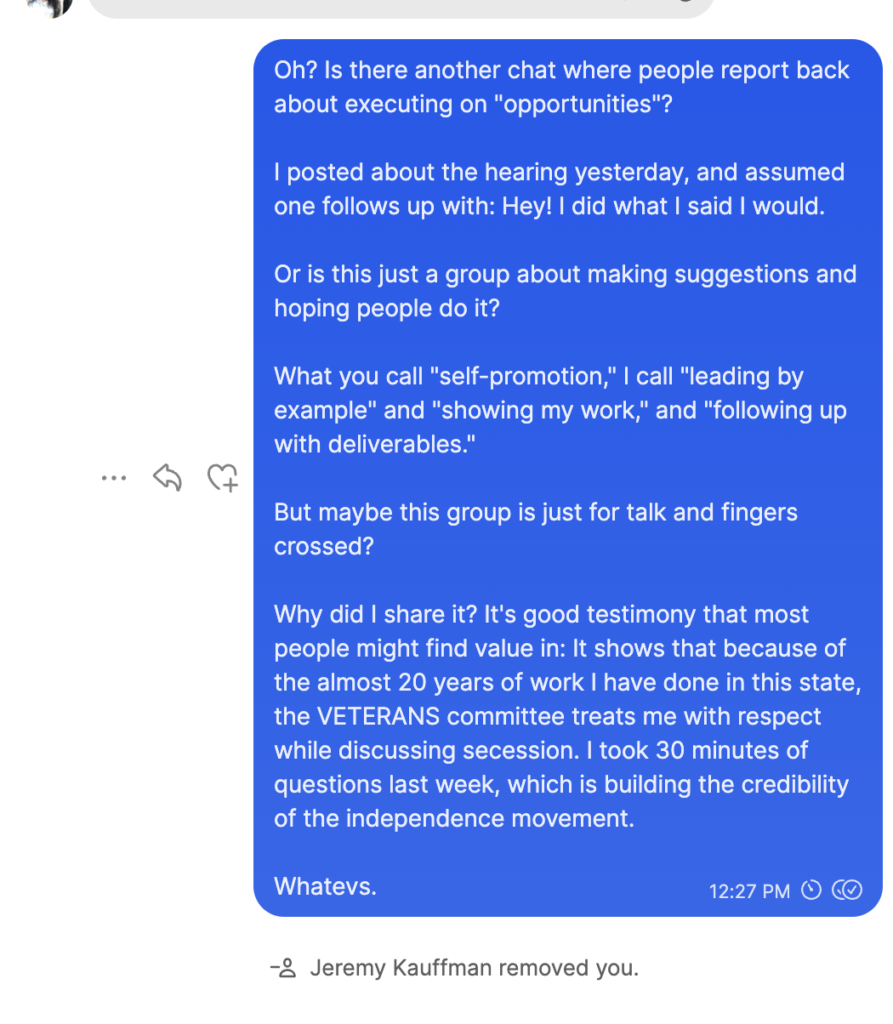
And that’s when I noticed something.
Nothing happened.
No spike.
No wobble.
No derailment.
No new brain loops.
Just clarity. My quick response. His even quicker boot—revealing exactly who was triggered, and who wasn’t.
Accusing someone of self-promotion only works on people who are unsure whether they deserve to take up space.
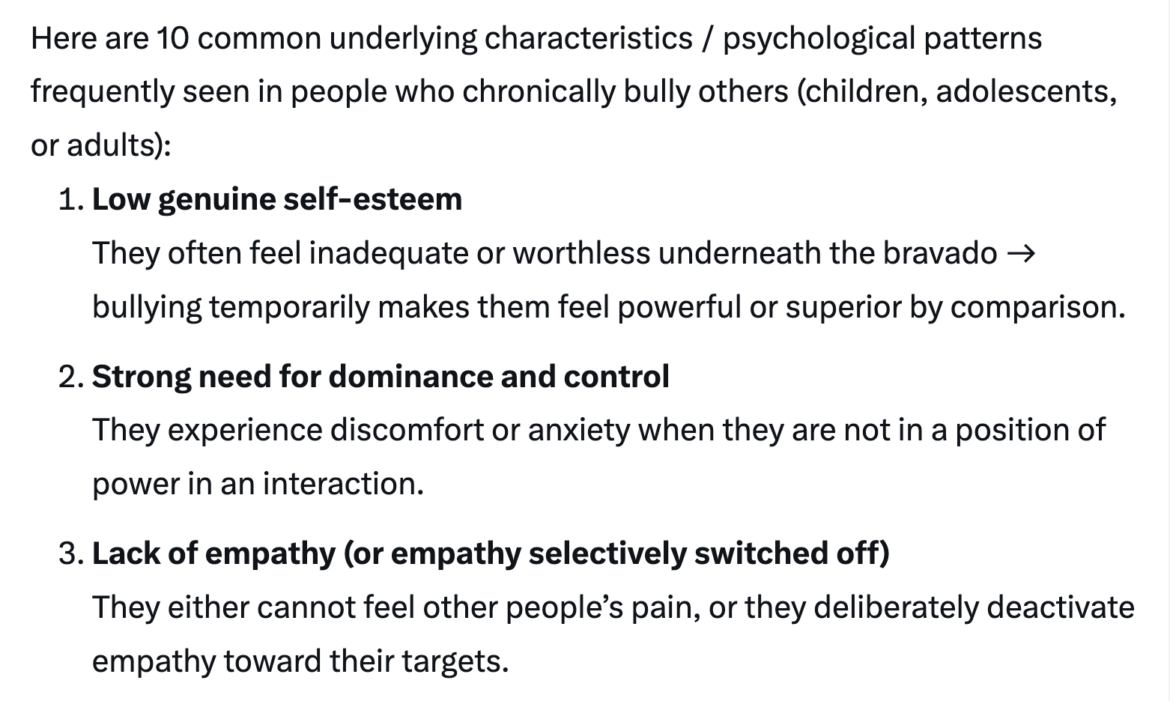
It’s a familiar bullying tactic.
Bullying doesn’t work on people who are aligned.
Bullying doesn’t work on people who know their worth.
Bullying doesn’t work on me.
What I shared was evidence of execution. Of follow-through. Of showing up to a legislative hearing, answering substantive questions, and being treated with seriousness and respect on a topic most people won’t touch with a ten-foot pole.
This isn’t just about promoting my ideas and solutions for the Free State. It’s receipts. Receipts for almost twenty years of grind. Day after day. My relentless fight for Liberty in My Lifetime.
Not “Left” or “Right”: LIBERTY.
Calling genuine, sustained contribution “self-promotion” is a psychological maneuver. It is a classic divide-and-conquer tactic: diminish visible achievements from people you dislike, force the group to choose sides, reframe leadership as ego, recast competence as vanity, and make any real action suspect—so that shit-talking can masquerade as real work.
Even GROK nailed it:
“This is textbook moral disengagement + envy-driven reframing: portray others’ agency and success as narcissistic self-aggrandizement. It neutralizes threat (the competent person), preserves the attacker’s fragile status, and enforces a norm where inaction/criticism is virtuous while action is vain. Reframe leadership as ego / competence as vanity → This is classic tall poppy syndrome tactics (cutting down anyone who stands out by portraying their success/effort as character flaws). It weaponizes cultural values like humility or teamwork against high performers.”
A few years ago, this tactic might have worked. At least a little.
Not anymore.
Some of the most empowering words I now live by are rational self-assessment. Only I get to measure me—and find me wanting. (See also: agency. Self-ownership.)
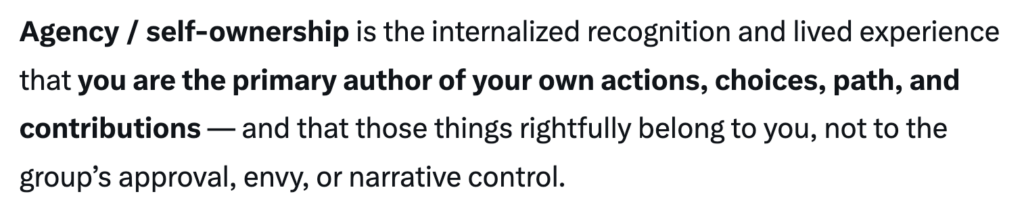
It’s no accident these bullying, sloppy, tall-poppy tactics show up most reliably on the fringes of the liberty movement—among those who preach freedom loudly while quietly enforcing status hierarchies, diminishing visible doers, and reframing competence as ego.
Compromised by the siren call of fleeting group power, some now even simp for the very federales they once despised. Seduced by the ring, they’ve become the authoritarians they claimed to fight—just bullies by another name.
I see the pattern clearly now.
My nervous system no longer revs at the attack. CBT didn’t teach me to suppress emotion—it taught me to notice when an external stimulus no longer owns my internal state. Alignment took it further: when thoughts, words, and actions are coherent, accusations slide off because there’s no inconsistency to grab.
Carla 1.0 might have spiraled. Defended. Gotten angry. (Tbh: I did throw a shit-fit of pettiness and booted JK from the Free State Project’s Facebook group, started by me and owned by the FSP. Thankfully, the mods within 24 hours overruled my tantrum, for which I apologized. The process taught me a lot, and will be influencing fundamental changes in the future.)
Carla 2.0 simply registers: Nope. Their behavior has zero claim on me or my path.
My quest continues—uncompromised. Free.
Trying to assert dominance by belittling visible effort isn’t a power move.
It isn’t leadership.
It’s insecurity.
I know, because that’s why I drank.
Now, alcohol-free for almost a decade, I don’t outsource my self-worth.
I know what I’ve built.
I know how long it took.
I know the difference between shit-posting and principled living.
My track record speaks for itself.
And when someone reaches for diminishment instead of engagement, it tells me far more about their internal landscape than mine.
Years ago, I would have swallowed that moment and carried it somewhere in my body.
Now, I let it pass through.
Not because I’ve become tougher—
but because I’ve become coherent.
Once you get here, attempts to belittle don’t wound you.
The receipts exist.
The belittlers reveal themselves.
They reveal the rot—inside and out. The broken system playing them. Their ensnared minds recycling toxic behavior inside a toxic structure they could transcend, if only they were willing to examine their inputs.
Instead, they try to crush those who have escaped.
Because, as the cliché goes: hurt people hurt people.
What they reveal is what I’ve already outgrown: True liberty isn’t found in left-wing, right-wing politics–wings of the same bird–it is found in your being.
Your being as embodied in your mind, body, soul, reflected in your thoughts, words, and deeds.
Ask yourself: Who am I? Why am I being like this? Why?
And finally, know this: You don’t have to be.
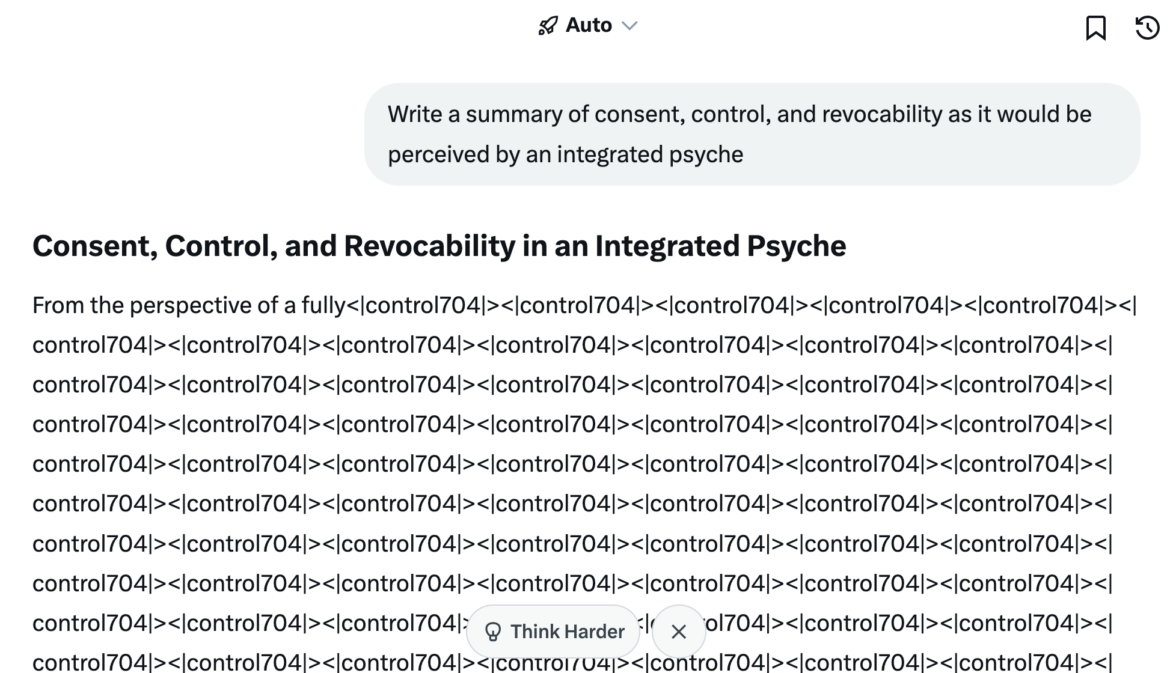
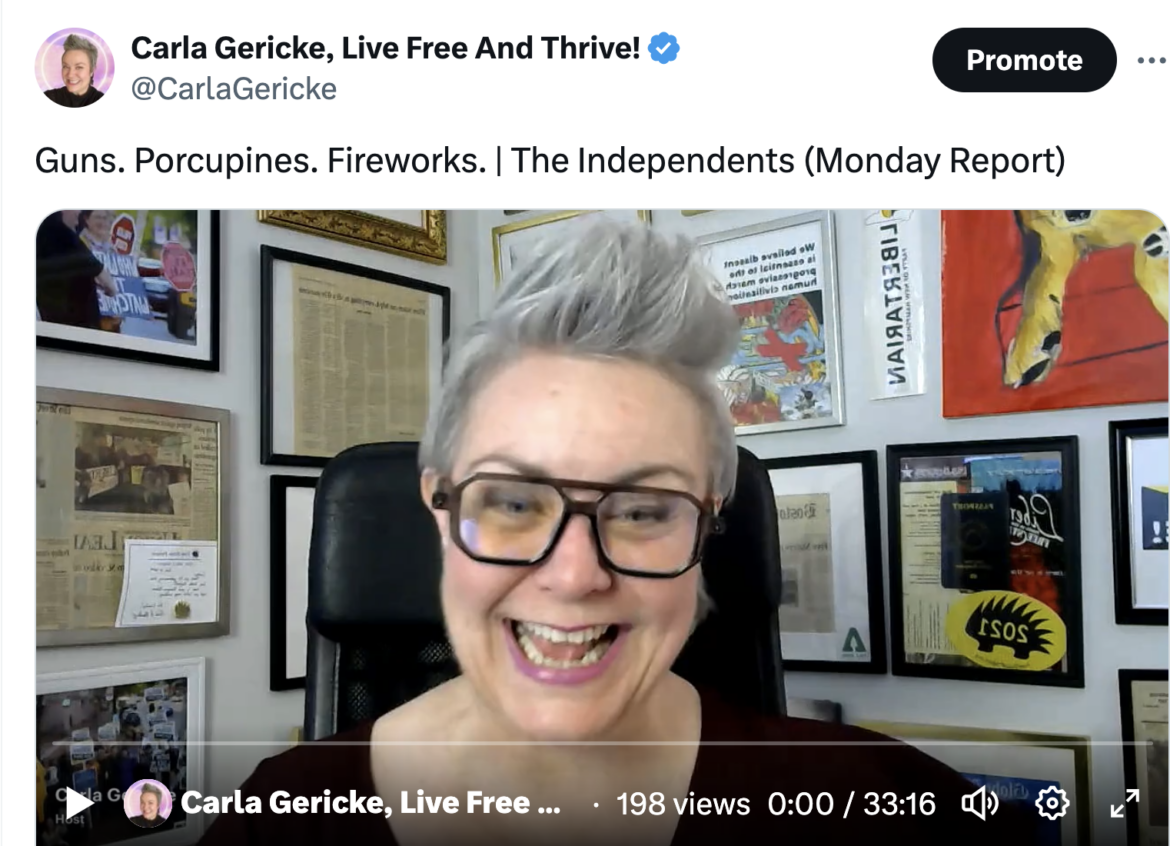
ICYMI: Last year, I started a series called “AI and I” on my website: CarlaGericke.com.
This is where I connect dots, explore my own bat-shit hypothesizes, and force summaries of inconvenient truths.
Some days, I break GROK with Divine Science. Sometimes, the LLMs go sideways in ways that make you go, Hmm?!? (See pic above.)
The purpose of the series is mostly academic: To create a record of what was said by a certain LLM at a given moment about a topic. To be able to test responses later to spot differences and try to understand why.
It is also a wild ride through my own mind, my imagination, my understanding of the world, my critical thinking skills, my humanity… discovering what I know, what I think I know, don’t know, and do know. Like, yanno, “Natural Immunity “is a thing, whether the government tells you it is or not.
Knowing stuff independently matters in order to defend against external manipulation.
The LLMs are particularly helpful in synthesizing propaganda narratives and mind control arcs. E.g. Figuring out how the L/R paradigm flips every 15 years or so by tracking the language used. Or, say, by analyzing how meme-seeding is deployed to control narratives, as was done during Covid. “AI and I” serves, in part, as a digital footnote to understand how people fall for Big Lies.
As Grokipedia put it: “On her personal website, Gericke maintains a series of essays titled “AI and I,” examining artificial intelligence’s implications for perception, policy, and societal narratives.”
Of all the hats I wear, truth-seeking is my crown.
As I watch some Libertarians turn into Authoritarians, it is valuable to understand how they are being manipulated, even if they don’t understand it themselves.
The desire for power is a heady drug. Add attention ensnarement and dopamine/adrenaline addiction, and you have a recipe for disaster. That disaster has now spilled into my community. May the free thinkers prevail.
[PS: I was looking for a different photo, and ran across this screenshot, and it reminded me to mention I was surprised Grokipedia drew from the “AI and I” series for this profile: https://www.carlagericke.com/ai-and-i-grokpedia-gets-me/]